Category: Zurich

  • Future-proof network infrastructure for buildings

    Future-proof network infrastructure for buildings

    Reichle & De-Massari(R&M) is tackling the expansion of data networks for “Next Generation WiFi”, as detailed in a press release. Accordingly, the global cabling specialist has added a hybrid concept to its range of cabling systems.

    The solution from R&M combines the existing LAN connection with fiber optics for data and power transmission. The higher transmission capacities mean that additional network infrastructures can be implemented.

    The aim is to achieve nationwide availability of WiFi 7 and 5G technologies. Although these technologies multiply transmission rates, they exceed the capacity of existing copper-based LAN cabling. “Anyone who wants to use WiFi 7 and 5G in buildings in the near future needs a practicable and future-proof cabling solution,” it says.

    According to the press release, the hybrid solution based on copper cabling is integrated into the modified building, floor and ceiling cabling (digital ceiling) and thus networks the next-generation access points via fiber optics. “At the same time, the antennas receive their power via the LAN cabling, which eliminates the need for an additional separate power supply,” it says.

  • Scaling solutions for innovative cell products

    Scaling solutions for innovative cell products

    (CONNECT) Migros, Givaudan and Bühler Group opened The Cultured Hub in Kemptthal, part of Lindau, on December 3. The scaling and growth service for the development of sustainable food and other cell products provides interested companies with modern product development laboratories, cell culture capacities and equipment as well as a partner network, the founders of the hub said in a press release. “The opening of The Cultured Hub is a pivotal moment for global efforts towards sustainable food production,” said Yannick Gächter, CEO of The Cultured Hub.

    The Hub allows up to three companies to work simultaneously on completely separate facilities. The state-of-the-art organic plant enables pilot projects with production volumes of up to 1000 liters. “The Cultured Hub is designed to help companies close the scaling gap so they can retain equity, protect intellectual property and accelerate their time to market without a large capital investment,” explains Ian Roberts, Chief Technology Officer of Bühler Group. For Matthew Robin, CEO of the Elsa Group at Migros-Genossenschafts-Bund, the hub “represents a paradigm shift in the way we approach food production”.

  • Labour Office sets course for the future

    Labour Office sets course for the future

    The Office of Labour is responding to changes in the world of work, including demographic change, labour shortages and advancing digitalisation. The organisation aims to become more efficient, customer-friendly and digital by 2030. A key objective is to offer jobseekers and companies modern services and simplified access to information.

    Hans Rupp, Head of the AFA, explains: “85 per cent of applications are already made digitally, and the trend is rising. Our customers want central points of contact and uncomplicated processes, which we want to provide through optimised digital offerings.”

    Consolidation of locations for greater efficiency
    The AFA’s services are currently spread across 16 RAV locations throughout the canton. In future, five to seven central locations will take over these tasks. This adjustment will be implemented gradually and is based on in-depth analyses. No job cuts are planned.

    Hans Rupp continues: “The previous structure dates back to a time when public transport was not yet so well developed. Today, centralisation allows us to reduce space and maintain specialisations and individual consultations in the long term.” By centralising, teams can be expanded and resources deployed more efficiently. At the same time, the organisation remains scalable so that it can react flexibly to rising unemployment.

    Added value for Zurich as a business location
    Carmen Walker Späh, Director of Economic Affairs, emphasises the strategic importance of the modernisation: “Our aim is to position the Employment Office as a modern and customer-oriented centre of expertise for the labour market. This will not only benefit our customers, but also Zurich as a business location.”

  • Innovation award for sliding solutions in the Zurich economic area

    Innovation award for sliding solutions in the Zurich economic area

    Hawa Sliding Solutions, based in Mettmenstetten, is the winner of the Prix SVC Wirtschaftsraum Zürich 2024 organised by the Swiss Venture Club(SVC) in Gümligen. An independent, regional jury of experts selected the global provider of sliding solutions from five finalists, according to a press release.

    Second and third place went to Schneider Umweltservice from Meilen and RepRisk from Zurich. LUZI from Dietlikon (4th place) and Hauenstein AG from Rafz (5th place) also reached the final.

    Jury president Christopher Blaufelder, Partner at McKinsey & Company Switzerland, recognised the quality and innovative strength of Hawa Sliding Solutions. “It shows that sliding doors are far more than just practical building elements. They make entire room sections invisible, transform them into design elements and combine functionality with aesthetics at the highest level,” he is quoted as saying in the press release.

    According to the family-run company, 240 employees at two locations create sliding solutions for furniture, doors, partition walls and façades. “Our solutions inspire architects, designers and fabricators to come up with ideas that they successfully realise together with us.”

    The Swiss Venture Club has awarded the regional SME prize for the ninth time. According to the independent association for the promotion and support of Swiss SMEs, the award is based on various criteria such as innovative products, services, corporate culture, quality of employees and management as well as a sustainable track record.

  • Partnership for climate protection and innovation

    Partnership for climate protection and innovation

    The Bern-based ClimateTech company Neustark has been awarded a long-term contract by AXA Switzerland to reduce CO2 emissions. From 2026 and until 2030, the company is to reduce 1800 tons of the greenhouse gas with its technologies for capturing and mineralizing carbon dioxide, according to a press release. The project is part of AXA’s strategy, which aims to reduce operational carbon dioxide emissions by 43 percent between 2019 and 2030. AXA is also working with the German-Brazilian start-up InPlanet, which aims to remove a total of 1950 tons of CO2 by 2028 and store it for the long term.

    “By supporting these projects, we are making a contribution to net zero and at the same time promoting future-oriented technologies and Switzerland as a location for innovation,” said Daniela Fischer, Chief Sustainability Officer at AXA Switzerland, in the press release.

    Neustark has developed a technology that captures CO2 from biogas plants and stores it in demolition concrete. “Partnering with pioneering companies like AXA Switzerland that are investing in permanent CO2 removal helps us to scale the carbon removal industry,” explains Lisa Braune, Head of Carbon Removal at Neustark.

  • Winterthur adapts building and zoning regulations

    Winterthur adapts building and zoning regulations

    The aim of the IVHB is to standardise key construction terms and measurement methods throughout Switzerland. Although the canton of Zurich has not joined the concordat, it is implementing the harmonisation – a significant step towards simplifying planning and building law. Winterthur is now integrating these changes into the local building and zoning regulations.

    Significant changes to the building and zoning regulations
    The partial revision of the BZO includes numerous amendments that are mandatory in connection with the IVHB building concepts. For example, 24 paragraphs of the BZO were adapted on a one-to-one basis. The dimensions were reviewed and adjusted in 15 paragraphs. For example, the building height is now defined on the basis of the façade height, which replaces the previous practice of full storeys.

    Introduction of the green area ratio
    This new term replaces the open space ratio and defines the relationship between green and plot areas. The aim is to promote unsealed, planted areas and preserve near-natural characteristics.

    Effects on planning applications and procedures
    The new green space ratio is already subject to a “negative prior effect”. This means that planning applications will be assessed according to both the previous and the new regulations. Projects that are still in the approval phase must fulfil both criteria.

    No value-added tax required
    As the amendments do not result in any planning advantages, there is no obligation to pay compensation in accordance with the law on value-added compensation.

    Public consultation and participation
    The planning documents for the partial revision of the BZO will be open to the public from 27 November 2024 to 27 January 2025. Objections can be submitted to the Office for Urban Development during this period. Interested citizens are invited to actively participate and voice their concerns.

    Winterthur is showing foresight with the implementation of the IVHB building concepts. Standardised definitions and sustainable building regulations strengthen the legal framework and create a future-oriented basis for urban developments.

  • Timber construction as the key to CO2 reduction in the construction sector

    Timber construction as the key to CO2 reduction in the construction sector

    The European research project TIMBERHAUS was launched in Copenhagen at the beginning of November, Empa announced in a press release. It is one of 19 partners from a total of ten countries participating in the project, which is funded by the EU and the State Secretariat for Education, Research and Innovation to promote timber construction in Europe. Within four years, innovative timber construction technologies and structures are to be developed with which CO2 emissions in the construction sector can be significantly reduced.

    According to Empa, the construction sector is responsible for 40 percent of global CO2 emissions. The use of wood could help here. Currently, however, European forest resources, half of which consist of hardwood, are only used “very inefficiently” and limited to a few types of softwood for construction, explains project coordinator Anders Kjellow from the Danish Technological Institute. “With TIMBERHAUS, we are trying to overcome this challenge in order to increase the sustainable use of wood in construction.”

    Empa is contributing to the project with innovative prototypes created using digital tools such as machine learning and artificial intelligence. “The prototypes will serve as practical examples of how we can effectively utilize a wider range of wood resources,” Empa researcher Mark Schubert is quoted as saying in the press release. “Our goal is to provide the construction sector with viable and efficient products that meet current building standards while promoting the principles of the circular economy and supporting European climate goals.”

  • Access solutions in transition: focus on growth

    Access solutions in transition: focus on growth

    Dormakaba is shifting its strategy implementation from “Shape to Growth”. “Our strategic transformation is on track and is delivering lasting and tangible improvements in results,” explained CEO Till Reuter in a statement on the occasion of the Capital Markets Day 2024 of the globally active locking technology company from Rümlang. Now dormakaba wants to gradually focus on growth. Specifically, the company wants to “become the leading provider of access solutions by connecting the physical and digital worlds”, said Reuter.

    Growth is to be generated by increasing performance and innovation and reducing complexity in the portfolio and supply chain. For example, dormakaba plans to reduce its software platforms by around half. The hardware portfolio is to be made modular, starting with the door closers. The supply chains will be trimmed for resilience, simplicity and cost efficiency. In doing so, dormakaba is focusing on best-cost countries and the respective local production networks.

    The “consistent implementation” of the ongoing transformation program remains “the central key to achieving our medium-term goals,” explains Reuter. In order to increase performance, the company is also implementing new measures in the areas of productivity, shared business services, automation and digitalization. These are expected to generate additional savings of CHF 40 million over the next few years. For financial year 2025/26, dormakaba expects an adjusted EBITDA margin of between 16 and 18 percent.

  • Advanced elevator solutions speed up the construction process

    Advanced elevator solutions speed up the construction process

    Austrian Real Estate is building a modern urban quarter in Vienna’s Donaustadt district. Part of the VIENNA TWENTYTWO project is a 47-storey high-rise building, which is due to be completed by 2025. The Austrian real estate company is relying on KONE from Wangen-Brüttisellen to keep to the schedule.

    Specifically, two JumpLifts from KONE are helping to speed up the construction process, the global elevator and escalator manufacturer explains in a press release. “The construction elevator, which was specially developed for high-rise buildings, uses the shaft before construction is complete,” KONE project manager Joachim Hahn is quoted as saying. “Thanks to the temporary installation of platforms in the open shaft, the KONE JumpLift can be moved to higher floors at regular intervals as construction progresses.” Compared to other outdoor elevators used in construction, the JumpLift is characterized by higher performance and safety as well as comfort and independence from the weather, writes KONE.

    In Vienna, one of the two JumpLifts is also controlled via the KONE SideFlow app, KONE explains. This allows specific usage rights to be assigned to various construction tasks in order to control the flow of materials and people. “This allows us to further accelerate the construction process,” explains Hahn.

    Once the construction work is complete, the two JumpLifts will be converted into KONE MonoSpace elevators. In addition, a further twelve KONE MonoSpace and TranSys elevators are to be installed in the high-rise building.

  • Milestone for the second stage of the innovation park

    Milestone for the second stage of the innovation park

    The Zurich Innovation Park combines research, development and aviation utilisation in a unique way. An area for the innovation park and for a research, test and industrial airfield will be created in the south-western part of the Dübendorf airfield. This vision includes not only modern infrastructure, but also publicly accessible green and open spaces. The project is of central importance for the region, the canton of Zurich and Switzerland as a whole.

    Design plan as the basis for sustainable development
    The newly established design plan for sub-area B creates a binding framework. It regulates the utilisation, the location of the building areas as well as design, ecological and traffic requirements. At the same time, the impact on the regional transport network is analysed in depth and green spaces are optimally integrated.

    Progress through participation and planning security
    Following a public consultation phase and the consideration of objections received, the design plan was revised and approved. It will come into force on 22 November 2024 and form the basis for future construction projects. This marks another important step towards the realisation of the Zurich Innovation Park.

  • New solutions for hinged and folding-sliding doors

    New solutions for hinged and folding-sliding doors

    Hawa Sliding Solutions has expanded its range with a new generation of fittings for swing and folding sliding doors. The new Hawa Concepta III turn-and-slide fitting extends the wide range of variants of the Hawa Folding Concepta III, explains the Mettmenstetten-based company, which specialises in sliding solutions for rooms, furniture and façades, in a press release. When closed, the hinged and folding sliding doors from Hawa look like a wall. With Hawa Concepta III, they can be rotated by 90 degrees, folded and inserted into a recess at the side.

    They can be opened and closed using a handle or a few touch points. “Everyone will get it right from the start,” explains Matthias Rothbrust from the Hawa innovation team in the press release. The doors are guided into and out of the side recesses without play using magnets.

    Hawa also acquired the Barcelona-based Klein Group in mid-October. The internationally active specialist for sliding solutions will strengthen Hawa’s portfolio and market position, Hawa writes in a corresponding press release. Klein’s locations and brands will also be retained under the Hawa umbrella.

    Hawa Sliding Solutions is one of five companies nominated for this year’s Prix SVC Wirtschaftsraum Zürich. The prize from the Swiss Venture Club(SVC) honours innovative companies in the region for outstanding achievements with great economic potential. It will be awarded on 26 November.

  • Future for the metropolitan area Strategy 2027

    Future for the metropolitan area Strategy 2027

    The MKZ focuses on further expanding Zurich’s innovative strength and attractiveness as a business location. Platforms are designed to promote the exchange of knowledge, while targeted projects and legislative initiatives create a positive climate for innovation. This is how the MKZ responds to challenges such as climate change and geopolitical uncertainties.

    Promoting education and research
    Zurich should retain its leading position in education and research. A mission statement will bring the various players in the metropolitan area closer together. At the same time, the MKZ is promoting digitalisation in the administration in order to position the location nationally and internationally for the future.

    Rethinking the use of resources and mobility
    New working models such as working from home and flexworking are seen as an opportunity to improve the work-life balance and organise the use of space more efficiently. Pilot projects should clarify how to deal with limited land resources in the growing Zurich area.

    Strengthening social cohesion
    The MKZ is committed to equal opportunities and participation. Integration projects, social mixing and anti-discrimination initiatives are intended to promote cohesion in society and strengthen trust in political institutions.

    Platform, advocacy organisation, innovation laboratory
    The MKZ has three strategic roles. It is a platform for dialogue, an advocacy group for common concerns and an innovation laboratory for new approaches. These roles make it possible to involve members and external stakeholders and create synergies.

    Organisational implementation
    The strategy is divided into fields of action, which are operationalised through concrete mediation and action goals. Expert groups contribute the necessary knowledge to effectively implement the strategic objectives.

    The Zurich Metropolitan Conference’s Strategy 2027 provides a clear framework for promoting innovation, sustainability and social cohesion in the metropolitan area. Through targeted activities and collaborations, the MKZ contributes to the positive development of the Zurich economic and living environment.

  • The future of renewable fuels in Switzerland

    The future of renewable fuels in Switzerland

    Switzerland is lagging behind countries such as Germany in the use of renewable energies for the production of fuels. However, with its companies and research institutions working in this field, it is well positioned to catch up. This was the conclusion of the two Power-to-X Days at the JED in Schlieren, which were organized by the Swiss Power-to-X Collaborative Innovation Network(SPIN), Avenergy Suisse and Swissmem. Around 140 representatives from business, science and politics, including Federal Councillor Guy Parmelin and Zurich Government Councillor Carmen Walker Späh, spoke about the possibilities of scaling up Power-to-X production.

    The participants pointed out that the development of Power-to-X is dependent on cooperation between industry, the financial sector and research and requires the right framework conditions. “Industry can do its part, but the market launch of new technologies cannot happen without universities and the financial world on board,” said Patrik Meli, Co-President of SPIN, according to a blog post on the first day of the event.

    Markus Bareit, hydrogen project manager at the Swiss Federal Office of Energy, referred to the hydrogen strategy for Switzerland, which the Federal Council intends to adopt in the coming weeks. The canton of Zurich, for its part, is planning a competence center for sustainable aviation fuel (SAF). Synhelion co-founder Philipp Furler pointed out that the proportion of SAF is to be increased fifty-fold by 2035. Regional initiatives are also part of the transformation, such as the Association for the Decarbonization of Industry in Zug and the hydrogen bus that has been running in Brugg AG since March.

    According to a press release from SPIN, the results of the discussions will be prepared and published in the coming weeks.

  • Field test started for vertical wind turbine in Brütten

    Field test started for vertical wind turbine in Brütten

    According to a press release,Agile Wind Power has been testing a scaled-down version of its vertical wind turbine in Brütten since the end of October. The company, based in Dübendorf ZH, wants to use it to test the control technology in the field. The tests in the wind tunnel yielded positive results.

    The test facility represents a milestone for the company. “This is an important step for confidence in the development of the turbine,” says Laurenz Zellweger, responsible for communications at Agile Wind Power. The rotors of a full-size test turbine in Grevenbroich, Germany, were cracked and then broke off, according to Zellweger the result of resonances in the rotor.

    The rotors of the Agile Wind Power turbine rotate around the mast instead of around a scar at the top of the mast, as is the case with conventional wind turbines. With a tower height of 133 meters in the A40 version and a rotor length of 65 meters, the diameter of the turbine is still only 40 meters.

    Agile Wind Power calls its innovative design Vertical Sky. It is intended to reduce the noise level of the turbine, simplify the logistics of installation and maintenance and reduce operating costs. In addition, locations that were previously unsuitable for wind power could be used.

    The field test in Brütten is expected to last around a year.

  • Energy City Gold for Zurich

    Energy City Gold for Zurich

    The city of Zurich has been awarded the Energy City Gold label for the sixth time in 2024, the city administration announced in a press release. Every four years, the Energy City Association awards the label to cities and municipalities that are committed to ambitious energy and climate protection goals. In the current evaluation, the city of Zurich achieved its best result to date.

    Across Switzerland, 109 cities and municipalities have been awarded the Energy City Gold label. “As the largest city in Switzerland, the city of Zurich serves as a role model for other energy cities that also want to consistently achieve their ambitious energy and climate policy goals,” Katrin Bernath, President of the Energy City Association, is quoted in the press release from her speech at the award ceremony. The award was accepted by City Councillor Michael Baumer. “The top score for the city of Zurich shows that we are on the right path to net zero,” said the head of the City of Zurich’s industrial operations.

    In the current re-audit, the City of Zurich’s energy and climate targets also included the area of climate adaptation for the first time. Zurich scored highly here with its specialised planning for heat reduction and urban trees. The city has also launched a programme for urban greening. This programme supports and financially promotes the ecologically valuable upgrading of outdoor spaces, green roofs and vertical greening by providing advice.

  • Dietikon presents new building and zoning regulations

    Dietikon presents new building and zoning regulations

    The building and zoning regulations of the town of Dietikon are undergoing a complete revision. On 31 October 2024, the town presented the overall revision to the population. The BZO regulates what, where and how can be built in Dietikon in the future. According to a press release, the draft revision is open to the public until 23 December. During this period, all interested parties are invited to submit written comments and suggestions, according to the city’s press release.

    The municipal building and zoning regulations date back to 1987, and Dietikon’s binding municipal structure plan was approved in autumn 2022. This and requirements such as the new planning and building law of the canton of Zurich were the impetus for the revision.

    With this overall revision of the BZO, the city is creating the strategic and building law framework for the renewal and further development of the current settlement structure, according to the city’s press release. Increasing the building density and thus changing the settlement structure in the outer residential neighbourhoods will be avoided in order to protect the green and uniform structures. Instead, the focus is on the development of central areas that are accessible by public transport, such as the city centre or the city boulevard.

    According to the city, the desired development should not simply offer more space for residents and employees, but also contribute to a higher quality of settlement. There are various specifications for private open and recreational spaces as well as measures to promote biodiversity and improve the urban climate.

  • Researchers develop commercially viable salt batteries for safe energy storage

    Researchers develop commercially viable salt batteries for safe energy storage

    Researchers from the Dübendorf-based Materials for Energy Conversion Laboratory of the Swiss Federal Laboratories for Materials Science and Technology(Empa) are continuing an Innosuisse project started by Ticino-based salt battery manufacturer Horien Salt Battery Solutions. The aim of the research collaboration is to develop economically attractive and usable salt batteries, according to a press release. Salt batteries are batteries in which the electrolyte is a solid, namely a ceramic ion conductor based on sodium aluminium oxide. The cathode is based on a granulate of common salt and nickel powder. The sodium metal anode is only formed during charging. Unlike conventional lithium-ion batteries, salt batteries are not flammable. They can therefore be used in areas where lithium-ion batteries are not permitted, such as in mining and tunnelling or on oil and gas platforms. Further advantages are their longevity and the significantly cheaper procurement of the raw materials. In contrast to the lithium-ion competition, the raw materials are cheap and available in large quantities, according to the press release.

    One disadvantage of these batteries is their high operating temperature. To be ready for use, a salt battery requires a temperature of 300 degrees Celsius. The researchers are looking for options to make the applications more economical. “Depending on the application, it is more economical to keep a battery warm than to cool it,” Empa researcher Meike Heinz is quoted as saying in the press release.

    Another endeavour is to operate the solid-state batteries nickel-free. The aim is to replace the cathode material nickel with other metals such as zinc. The aim is to establish salt batteries as long-term stationary storage systems thanks to their safety, long service life and the absence of critical raw materials.

  • Overview of the attractiveness of Swiss residential areas

    Overview of the attractiveness of Swiss residential areas

    UBS has presented its Residential Attractiveness Indicator 2024. According to a press release, the Chief Investment Office Global Wealth Management examined 13 regions in Switzerland. According to the report, ten of these regions have the highest attractiveness for a family with two children and average financial means in their medium-sized centers. They include Locarno TI and Vevey VD as well as the cantonal capitals of Aarau, Chur, Fribourg, Lucerne, Neuchâtel, Sion, Solothurn and St. Gallen. In addition to the medium-sized centers in these areas, top municipalities such as Basel, Interlaken BE and Murten FR are also among the attractive residential areas. The major centers of Bern and Lausanne are also among the top addresses in their region.

    As selection criteria, the big bank chose the local infrastructure, leisure facilities and housing costs. While offers such as a wide range of stores, good medical care, the availability of schools and children’s facilities increase the attractiveness of the first two criteria, as do sports and leisure activities, high housing costs such as rents and ancillary costs clearly limit this. This is just as clear in the Zürchsee municipalities as it is in Lausanne or Lugano. Exceptions among the high-priced municipalities are Schaffhausen, Goldach SG, Rheinfelden AG, Yverdon-les-Bains VD and Delsberg JU. The report shows that families with above-average incomes also prefer to live in city centers.

    To determine the indicator, a weighted average of the infrastructure, leisure and housing costs pillars, supplemented by 35 variables, was calculated for each municipality and each household type.

  • onOffice integrates Residentures platform for real estate auctions

    onOffice integrates Residentures platform for real estate auctions

    Residenture AG has announced its collaboration with onOffice GmbH. In a statement, the Zurich-based start-up Residenture, founded in 2022, describes onOffice as the leading CRM (Customer Relationship Management) provider for real estate professionals in Europe and the announcement of this cooperation as its most important to date. OnOffice is headquartered in the German city of Aachen and has offices in Baar ZG, London, Zagreb, Ljubljana, Vienna, Turin and Barcelona.

    The cooperation between the two companies relates to the seamless integration of Residenture’s digital auction platform into onOffice’s CRM. This enables estate agents to “market properties effortlessly, attract more prospective buyers and sell faster – all without having to learn a new tool”.

    Property owners are protected by the minimum price function. The transparent auction process allows them to follow the bids in real time. At the same time, the competitive nature of the auctions often leads to higher final sale prices.

    Buyers should also benefit from this transparency. The digital platform makes participation simple, secure and accessible from anywhere.

    Residenture has also announced that it is expanding throughout Germany and into other EU countries thanks to a recent six-figure investment in order to “change the real estate market across the continent” for both buyers and sellers.

  • Solar power: first system of the second project in operation

    Solar power: first system of the second project in operation

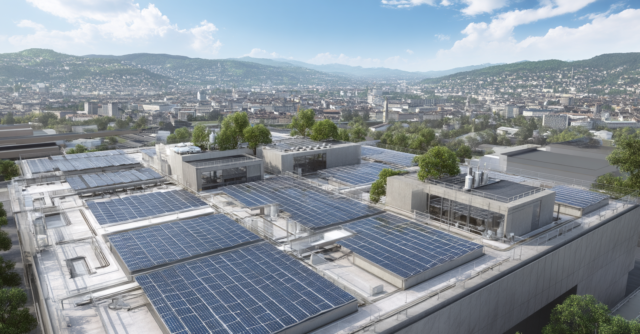
    Zaugg Schlieren AG put the first third of its second solar plant in Schlieren into operation in mid-October. The corresponding building permit was only applied for at the end of February, the Schlieren-based packaging and logistics specialist reports in a post on LinkedIn. The installed capacity is stated as 98.28 kilowatts peak. This means that around 95 megawatt hours of solar power can be produced each year.

    By 2026, Zaugg Schlieren plans to have installed solar systems with a total output of 271.47 kilowatts peak. This means that around 263 megawatt hours of solar power can be generated each year. The company was founded in 1977 by Werner Zaugg on the site of the recently decommissioned gasworks in Schlieren. Since 2011 , Switzerland’s first professional transport packaging and crate manufacturer has also been represented with a site in China.

  • Residential and commercial complex with 272 flats and hotel being built in Opfikon

    Residential and commercial complex with 272 flats and hotel being built in Opfikon

    Implenia has cleared another hurdle in the realisation of the Rocket & Tigerli project. The planning application for the Rocket high-rise and the three separate Tigerli buildings was submitted on 26 September, the construction and real estate company based in the Glattpark district of Opfikon announced in a press release. A total of 272 flats, a hotel and commercial and event spaces are to be built here. Construction work is scheduled to begin in the third quarter of 2025.

    The Rocket high-rise is one of the tallest timber residential buildings currently planned, explains Implenia. Implenia developed the construction method in collaboration with the Swiss Federal Institute of Technology in Zurich(ETH) and the civil engineering firm WaltGamarini. For the Tigerli buildings, on the other hand, Implenia is using the traditional solid construction method of reinforced concrete and brick. All four buildings are due to be completed by the end of 2028.

    On 21 October, the client of Rocket & Tigerli, Ina Invest, will present the project at the Lokhaus in Winterthur. The exhibition on the project can then be visited until 25 October.

  • Expansion of the Schoch office in the Zurich area

    Expansion of the Schoch office in the Zurich area

    Büro Schoch Werkhaus AG took over Mohn Bürokultur at the beginning of October. The Zurich-based company, which specializes in office furnishings, will in future operate as a branch of Büro Schoch Werkhaus AG in Winterthur. The takeover is part of the company’s growth strategy for the Zurich economic area, the specialist for working environments announced in a press release. The purchase price was not disclosed.

    The Mohn Bürokultur brand will also be retained under the umbrella of Büro Schoch Werkhaus AG. Management will also remain in the hands of Markus Mohn, according to the press release. The merger will expand Büro Schoch Werkhaus AG’s offering in the design of working environments.

  • Zurich utilities expand smart meter network

    Zurich utilities expand smart meter network

    According to a press release, the electricity utility of the city of Zurich(ewz), Energie 360° and the Zurich water utility (WWZ) are expanding the use of smart meters. They are replacing analog meters that are still read by hand. This allows consumption data to be recorded and transmitted more quickly. By reading electricity, water and gas digitally, customers would have more transparency about their consumption. For the water supply, there are additional advantages in terms of troubleshooting. Any leaks and pipe damage can be detected more quickly using digital water meters.

    Ewz has been working on the supply of digital meters since August 2024. Gas supplier Energie 360° has been involved in the expansion of smart metering systems since April. Ewz plans to replace as many conventional meters as possible with digital meters by 2029. Around 300,000 smart meters are to be available in the city of Zurich and a further 4,000 in the ewz supply area in Graubünden. WVZ has announced the installation of 33,000 smart water meters by 2036.

    “With the installation of smart meters, we are taking an important next step towards the digitalization of the supply networks,” said City Councillor Michael Baumer, Head of the Department of Industrial Operations.

    Like their predecessors, the smart meters will continue to be installed primarily in basements.

  • Cooperation for intelligent lighting and building solutions

    Cooperation for intelligent lighting and building solutions

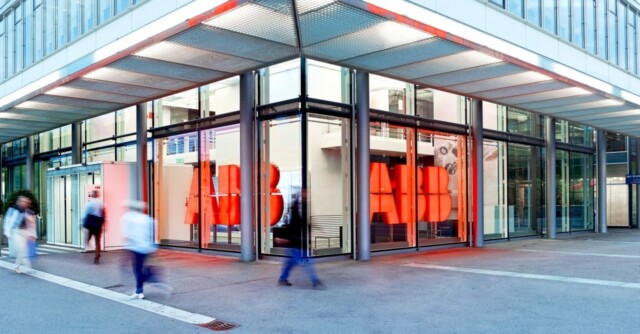
    The technology company ABB and the Austrian Zumtobel Group are working together on the further development of intelligent lighting and building solutions as well as direct current applications. According to a press release, the companies will focus on integrating ABB’s building automation solutions with the Zumtobel Group’s lighting management systems.

    Both companies expect the “combined expertise” to result in “more efficient, more sustainable and more user-friendly smart building environments”. To this end, the application of sensor-based lighting solutions will be accelerated with the aim of “optimizing energy efficiency, increasing the comfort of building users and maximizing the effectiveness of heating, ventilation and air conditioning control”. The added value is intended to benefit customers in the commercial, industrial and administrative sectors.

    The cooperation is intended to promote innovations in the use of direct current technology in large-scale industrial applications. The resulting synergies should make buildings more efficient, sustainable and user-friendly. The use of modern industrial power grids would allow renewable energy to be used on a larger scale. This saves resources, reduces feed-in power and leads to stable grids and an open system for users.

    “Our partnership concept enables us to better address innovation, standardization and sustainability and to continue to play a pioneering role in new technologies,” Lucy Han, EVP for Building and Home Automation Solutions at ABB, is quoted as saying.

  • Dormakaba receives four winners at the Iconic Awards 2024

    Dormakaba receives four winners at the Iconic Awards 2024

    Dormakaba returns home from the Iconic Awards 2024: Innovative Architecture ceremony in Munich with four awards. The locking technology company from Rümlang impressed in three categories with a total of four solutions for access control, access and time recording, dormakaba explained in a press release. Specifically, the new terminal generation for time recording and the new Axessor APEXX IP digital high-security safe lock series were each awarded a Winner in the Product-Building Technologies category, the MotionIQ automatic door system in the Energy Solutions category and the skyra cloud-based access solution in the Product Special category.

    “These awards strengthen our reputation as a design-oriented company and are a sign of recognition for creative product development and innovation,” said Torsten Stolte, Managing Director of dormakaba Deutschland GmbH, in the press release. “They also motivate our employees to continue developing products of the highest quality.” The awards were accepted in Munich by Alfred Aschmann, Deputy Vice President Product Management, and Bernhard Heitz, Strategic Product Design at dormakaba.

  • New coating material dampens vibrations and noise

    New coating material dampens vibrations and noise

    Materials researchers at the Swiss Federal Institute of Technology in Zurich(ETH) have developed a layered material that is both rigid and load-bearing, as well as having a high level of vibration and noise damping. Ioanna Tsimouri achieved a feat in her doctoral thesis with Andrei Gusev and Walter Caseri, writes the ETH in a press release. The two properties are actually incompatible.

    The composite materials developed by Tsimouri are made up of several layers of glass and silicon plates that are connected by rubber-like polymer layers. Tsimouri initially worked with Gusev to calculate how thick the polymer layers needed to be in order for the layered material to be both rigid and damping. Computer models showed that the glass and silicon layers, which are only tenths of a millimeter thick, must make up at least 99 percent of the volume of the entire layered material. “If the polymer layer is too thin, there are hardly any damping effects,” explains Tsimouri in the press release. “If it is too thick, the material is not stiff enough.”

    The layered materials have already proven their mechanical properties in frequency- and temperature-dependent experiments. Production on an industrial scale should also be possible: “If a manufacturer has the appropriate machines, they can also produce the laminate in panels measuring several square meters,” says Caseri. The researchers have therefore applied for a patent for their technology. In their opinion, the material could find a variety of applications in sectors ranging from construction to mechanical engineering, aerospace and sensor technology.

  • Innovative approaches to property management

    Innovative approaches to property management

    Focus on sustainability
    The morning is all about “Sustainable properties”. Here you will discover how you can not only manage your properties efficiently, but also organise them in an environmentally conscious way. Our experts will show you which optional services you can integrate to minimise the ecological footprint of your properties and at the same time create value for your customers.

    Socially responsible de-tenancy processes
    In the afternoon session, we will focus on the sensitive topic of “Socially responsible de-tenancy processes”. In this section, you will learn how to implement a variety of letting strategies that take both legal and ethical aspects into account. Discuss with our expert speakers how you can promote relaxed dialogue and fair solutions to gain the trust of your tenants and build long-term relationships.

    Specialist speakers

    • Dr Joëlle Zimmerli, Zimraum GmbH
    • Dr Christian Brütsch, Stratcraft GmbH
    • Pascal Stutz, CEO SVIT Zurich

    Take this opportunity to exchange ideas with other leaders and gain valuable inspiration for your own practice. Be part of a movement that aims not only for economic success, but also for sustainable and socially responsible property management.

    Register today and actively shape the future of the sector!

  • Demolition of the Hasler site in Dietikon

    Demolition of the Hasler site in Dietikon

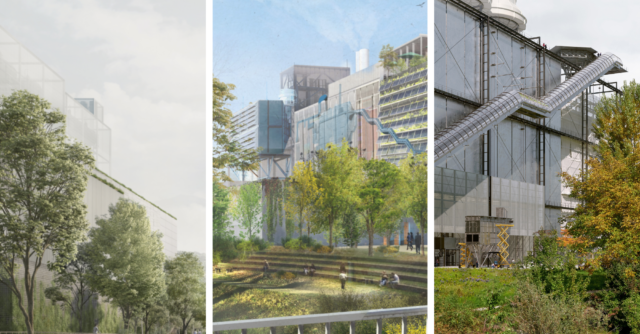
    Limeco is having the Hasler site in Dietikon dismantled. Between October 2024 and April 2025, the glasshouses and halls of the former Hasler plant nursery are to be demolished and the contaminated soil removed, the Limmattaler Regiowerk announced in a press release. Limeco acquired the site last year as a land reserve for the Limmattal Energy Center generation project.

    The Regiowerk is obliged to rebuild its waste recycling plant and expand the wastewater treatment plant (WWTP) by 2034. The Limmattal Energy Center is to be created in the process. The necessary work is to be carried out in stages and make the greatest possible contribution to the energy and climate transition in the Limmat Valley.

    Limeco already acquired the Coop site in Dietikon in 2018 for the implementation of the generation project. The Hasler site will serve as an assembly and installation site during the construction phase. Otherwise, Limeco intends to offer it to third parties for rent or use it for a land swap for more suitable areas.

  • Real estate industry anticipates rising prices for residential properties

    Real estate industry anticipates rising prices for residential properties

    “Confidence is back in the real estate sector and is displacing the negative expectations of the two previous years,” is how KPMG introduces a press release on the latest edition of the consultancy firm’s Swiss Real Estate Sentiment Index. Specifically, the index is now back in positive territory at 29.9 points. However, the approximately 400 real estate experts and valuers surveyed for the index only expect prices in the residential real estate market to rise. They believe that prices for commercial and specialist properties will continue to fall.

    The assessment of economic development is also currently positive again at 21.5 points after two clearly negative years. “The optimistic economic outlook is linked to the easing of interest rates on the one hand and the progress made by the central banks in combating inflation on the other,” Beat Seger, real estate expert at KPMG, is quoted as saying in the press release. In terms of risk perception, stricter regulations have pushed interest rate risks into the background.

    The real estate experts surveyed expect prices to rise, particularly in the Zurich, Lucerne/Zug and Geneva regions. For the Lugano and Basel regions, however, they expect prices to continue to fall. The majority of respondents are also of the opinion that the current political initiatives are exacerbating the shortage of affordable housing.

  • New school building creates space for 500 pupils

    New school building creates space for 500 pupils

    The Lycée Français de Zurich has celebrated the laying of the foundation stone for a new building. The planned extension will create space for around 500 new pupils, the public school from Dübendorf announced in a press release. The Lycée Français currently has around 1130 pupils.

    The expansion is being managed by the Zurich branch of HRS from Frauenfeld and financed by Zürcher Kantonalbank. The construction work should be completed by the start of the 2026 school year. In the same year, the Lycée Français de Zurich looks back on 70 years of history.

    The Lycée Français de Zurich is run by parents and is recognised by the Canton of Zurich’s Department of Education. At the public school, children aged 3 to 10 receive bilingual tuition in German and French. They can then go on to specialise in German and English in an international branch and take the trilingual international French baccalaureate at the end of their schooling.

    Marion Paradas, Ambassador of France to Switzerland and Liechtenstein, Marc Ferracci, Member of the French Parliament in Switzerland and Minister of the French Government, and Susanne Hänni, President of the primary school and Councillor of the municipality of Dübendorf, were among those present at the laying of the foundation stone.

    The ceremony to mark the opening of the construction work included the preparation of a time capsule to be placed in the foundations of the building. The time capsule was filled with documents about the construction of the building, daily newspapers and the school’s yearbook.