Category: Sustainability

  • Renewable heating with district heating

    Renewable heating with district heating

    District heating is an important part of Basel’s climate strategy. Over 6,500 households and businesses are now supplied with environmentally friendly heat via 130 kilometers of district heating pipes. This is largely generated by using waste heat from the waste incineration plant and wood-fired power stations, which significantly reduces CO² emissions. By 2037, the network will grow to 180 kilometers and supply a large part of the city. The cycle works efficiently by heating hot water centrally, transporting it to customers, collecting it there and feeding it back into the plants.

    Innovative production
    A master plan forms the basis for ensuring that only renewable sources and waste heat are used to generate heat from 2035 onwards. IWB is relying on a large heat pump, which will use and label waste heat from wastewater treatment, to meet the increase in heat sales resulting from customer growth.

    Decarbonization and coordinated expansion
    The political mandate is clear. The canton of Basel-Stadt must become climate-neutral by 2037. IWB is investing over 450 million Swiss francs in the expansion of the district heating network and the associated infrastructure. At the same time, the gas network will be decommissioned in stages. For gas-heated properties, the transition will be planned early and transparently. The owners are informed at least three to four years before the shutdown and can apply for subsidies to replace the heating system. An interim solution can also be used to bridge the gap until district heating is connected.

    Planning the network expansion is a logistical and organizational feat. The expansion of district heating is coordinated with road renovations, greening, the renewal of electricity and water pipes and traffic planning measures. In densely populated districts, optimized construction times and efficient work processes are crucial. From planning to implementation, the Department of Construction and Transport, IWB and Basler Verkehrs-Betriebe work in partnership and in close coordination.

    Attractive connection solutions for owners
    Whether individual, multiple or shared connections, district heating can be obtained according to customer requirements. Cooperative connection models are becoming increasingly important, particularly in Basel’s city center, but also in densely populated districts. In the case of multiple connections, neighboring buildings are connected via house-to-house lines; in the case of community connections, several properties share a central heating station, which saves space and costs. Each property remains technically independent, but benefits from attractive conditions and efficient operation.

    Basel as a role model for the urban heat transition
    With the ambitious expansion of district heating and the gradual phasing out of fossil fuels, Basel-Stadt is focusing on a climate-friendly heat supply in the urban environment. The combination of renewable production, intelligent grids, coordinated expansion and cooperative connection models makes the transformation a successful example of a sustainable energy policy. For Basel, the region and Switzerland.

  • Modernized shopping center boosts usage and energy efficiency

    Modernized shopping center boosts usage and energy efficiency

    Schlieren-based Halter AG has completed the modernization and redesign of the Signy Centre in Signy-Avenex. The renovation included two buildings with administrative and commercial space, three floors with around 50 stores and five parking decks with a total of around 1,100 parking spaces. According to Halter, the project started in 2023 and has now been completed with the official handover to customers.

    As part of the renovation, the technical systems and security facilities in the Signy Centre were modernized. Halter also redesigned the shopping center and its outdoor facilities. According to the company, the completed renovations increase the comfort and safety of employees and customers in the shopping center. The site’s energy and environmental footprint has also been improved.

    The project also involved the companies Burckhardt and ARFOLIA, which were responsible for the architecture and landscape architecture respectively. While sd ingénierie was involved as the civil engineer, Caeli Ingénierie took on the role of technical engineer. The last fire protection engineer was srg engineering.

  • Business award recognises industrial expertise and regional roots in Thurgau

    Business award recognises industrial expertise and regional roots in Thurgau

    GLATZ AG from Frauenfeld has secured the Thurgau Business Award 2026, which is presented annually by the Thurgau Chamber of Commerce and Industry, the Thurgau Trade Association, the Thurgau Cantonal Bank and the Department of Home Affairs and Economic Affairs.

    According to a press release, the family business impressed the jury with its combination of cross-generational business activities, international competitiveness and regional loyalty. With its patented sunshade frames, a high level of vertical integration, an in-house sewing workshop and uncompromising quality standards, GLATZ AG is a trendsetter in shade solutions – at a time when the international low-cost market is squeezing out many competitors. The large sunshades from Frauenfeld, which can withstand wind speeds of up to 115 kilometres per hour, are exported from Thurgau to over 50 countries.

    “The company has been firmly rooted in Thurgau for over 130 years – and at the same time carries the quality and innovative spirit of Thurgau as a centre of industry out into the world,” says Thomas Koller, jury president of the Thurgau Business Award.

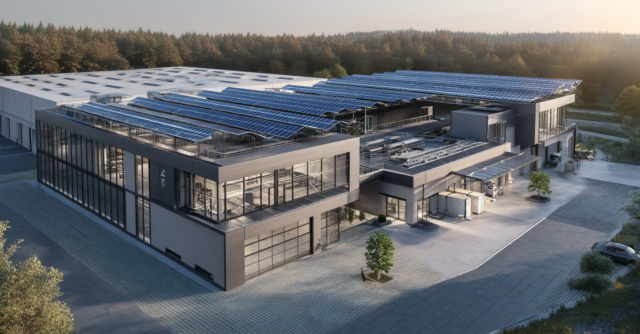
    The move to the new headquarters on Langfeldstrasse in Frauenfeld in 2024 shows that GLATZ AG will remain rooted in Thurgau in the future. The new building, which combines research and development, production, administration and a modern training centre under one roof, was also built with a focus on sustainability. Photovoltaic systems, energy-efficient heating and cooling systems and shorter transport routes reduce the CO2 footprint.

    The award ceremony will take place on 15 April 2026 at GLATZ AG in Frauenfeld.

  • Timber construction sets new standard for cantonal buildings

    Timber construction sets new standard for cantonal buildings

    Architect Markus Schietsch has received a silver Hase Architecture Prize from “Hochparterre” for his new construction of the cantonal AVS building in Unterentfelden. The prize was awarded on December 2 at the Zurich Museum of Design. It recognizes the architectural quality of the building and the consistent implementation of sustainable construction methods.

    The new building with its laboratory and office workstations for currently 80 employees was officially opened on October 25, 2024 after two and a half years of construction. The construction work was planned and carried out by Immobilien Aargau.

    “The award confirms the path we have taken,” said Cantonal Councillor Dr. Markus Dieth in a press release. “The canton of Aargau invests in sustainable, economical and high-quality buildings that also take cost-efficient construction into account. I would like to congratulate Markus Schietsch and the Aargau Real Estate Department on this success.”

    According to Schietsch, this award shows “that careful planning, a clear architectural approach and the courage to use sustainable materials such as wood are more in demand today than ever before”. Head of office and cantonal chemist Dr. Alda Breitenmoser emphasizes that the new building offers “optimal working conditions” for consumer protection: “The architecture supports our work processes, creates a pleasant indoor climate and shows that modern administration can be ecological and functional at the same time.”

    At the beginning of November 2025, the new AVS headquarters received an award from the Pro Holz Aargau wood network for its timber construction.

  • Expansion of the recycling of building materials in Europe

    Expansion of the recycling of building materials in Europe

    Zug-based Holcim AG intends to significantly expand its portfolio in the recycling of building materials in Europe. According to a press release, the international building materials company has acquired two demolition companies in England and Germany and is preparing to take over a third in north-west France. These three companies currently recycle 1.3 million tons of construction waste annually.

    The new acquisitions include Thames Materials from West London and A&S Recycling GmbH from Hanover. The company, which operates in north-west France, has not yet been named by Holcim. With Thames Materials, Holcim is now operating in the Greater London area. Holcim had already acquired the logistics company Sivyer Logistics in East London in 2023. A&S Recyling processes demolition materials in northern Germany with three locations in the German state of Lower Saxony. With the takeover of the French company, Holcim is increasing the number of recyclers it manages in the country to 28.

    “The acquisitions of Thames Materials, A&S Recycling GmbH and a recycling company in northwest France will further strengthen our leading position in circular construction and contribute to our NextGen Growth 2030 target of recycling more than 20 million tons of construction demolition materials annually,” Milan Gutovic, CEO of Holcim, is quoted as saying in the press release.

  • Hot concrete from Pompeii

    Hot concrete from Pompeii

    Roman concrete forms the backbone of many structures from port facilities to aqueducts that have withstood wind, weather and earthquakes for over 2000 years. Admir Masic’s research group at MIT has been investigating for years why this building material is so exceptionally durable, based on chemical analyses of ancient mortar. As early as 2023, the team formulated the hypothesis that the Romans did not use lime as a ready slaked paste, but mixed it dry as quicklime together with volcanic ash and only then added water.

    Pompeii as a preserved building site
    The latest investigations are based on a unique site in Pompeii. A construction site “frozen” by the eruption of Vesuvius in 79 AD with half-finished walls, piles of material and tools. In samples from the pre-mixed dry heaps, from walls under construction and from finished components, the researchers found not only the familiar white lime clasts, but also intact fragments of quicklime in the dry mixture. This suggests that the slaking reaction, i.e. the reaction of the burnt lime with water, only took place during the actual mixing and hardening of the concrete and not beforehand, as described in classical accounts.

    Contradiction with Vitruvius and how it is resolved
    In the 1st century BC, Vitruvius described in “De architectura” that lime was first slaked with water and then mixed with aggregates. The hot mixing technique that has now been identified deviates from this in that the lime is combined with volcanic ash as quicklime in the dry phase and the water is only added afterwards. Isotope analyses of the mortars show the characteristic carbonation processes that match this process and differ from mortars with previously slaked lime. Instead of completely “refuting” Vitruvius, experts tend to interpret the findings in such a way that his description does not reflect the entire spectrum of Roman practice. Regional or temporal variations such as hot-mixing appear to have been more widespread than long assumed.

    Self-healing concrete as a model for tomorrow
    The hot-mixing process generates considerable heat when quicklime and water come into contact, trapping reactive lime particles in the concrete structure. If microcracks form later, these particles can dissolve again, react with penetrating water and fill the cracks again. A self-healing mechanism that plausibly explains the longevity of Roman buildings. The new findings are being incorporated into the development of modern, sustainable concrete. The aim is to reduce CO₂-intensive binder content, massively extend the service life of buildings and thus reduce the consumption of resources in the construction industry. All in the spirit of an ancient model that is only now being fully understood chemically.

  • Railroad modernization in the sensitive Alpine region

    Railroad modernization in the sensitive Alpine region

    STRABAG AG is carrying out the outstanding renovation work on the Zentralbahn line between Meiringen and Brienzwiler in the Bernese Oberland. The narrow-gauge line runs on a single track along the Hasliaare, which is part of the Aare flood plain. Out of consideration for several nature conservation areas, “maximum precision for logistics and coordination” is required for the new construction, according to a press release. Preparatory work began in March 2025 and the ten-week intensive phase has been underway since October 2025.

    Heavy rainfall events had repeatedly occurred in the area, causing the railroad embankment and superstructure to flood, resulting in damage to the railroad infrastructure and adjacent cultivated land. STRABAG already carried out track construction work there in 2022 and 2023 (lots 1 and 3). The modernization project will now be completed with a total reconstruction of the challenging middle section of lot 2 over a length of 2600 meters and in the middle of the Sytenwald nature reserve. This involves raising the railroad embankment. To allow surface and slope water to drain away, a continuous planned drainage system will be installed along the route. The area along the Hasliaare will receive a new flood protection wall.

    According to the press release, the “tight space conditions and local lack of redundant construction slopes in certain sections between the Hasliaare, the railroad line and several nature conservation areas” are a special construction feature, which requires special precautions for ecology and landscape protection. On the one hand, STRABAG is building 30 new foundations for the catenary masts on the side facing away from the river, and on the other, 37 crossings are to ensure the ecological continuity of the terrain. This means protection for wildlife and small animals when crossing the section.

    A particularly challenging component is the new construction of the Hüsenbach bridge made of ultra-high-strength and durable fiber-reinforced concrete (UHPC). During bridge construction, special consideration was given to the trout population present there at spawning time.

  • Lift technology strengthens the development of the destination Andermatt

    Lift technology strengthens the development of the destination Andermatt

    As a partner of Andermatt Swiss Alps, the Finnish lift and escalator manufacturer KONE has realised one hundred installations since 2011, according to a press release. As part of Samih Sawiri’s development project for the destination, 1.7 billion Swiss francs are being invested, with a focus on long-term partnerships. KONE passenger and goods lifts are now in operation in luxury hotels, villas and flat blocks in the area. The company, which has its Swiss headquarters in Brüttisellen, is also responsible for new escalators and a moving walkway at Andermatt railway station.

    According to the press release, most of the passenger lifts installed are the KONE MonoSpace 500 DX and KONE MonoSpace 700 DX models, while the goods lifts are TranSys DX models. In addition, customised lifts have been manufactured for the five-star Chedi Andermatt hotel, for example.

    Sustainability in terms of energy efficiency, energy recovery and service life played an important role in all projects, according to the company. This is not only in line with the Andermatt Responsible initiative, but also with KONE’s principles. It is noted that KONE was voted one of the 20 most sustainable companies in Europe by the trade magazine “Corporate Knights” in 2025.

    According to Jan-Eric Mahnkopf from Andermatt Swiss Alps, a project of this size and duration can only be successfully realised with strong, long-term partnerships. “With KONE, we have a technologically leading and flexible partner at our side who has reliably fulfilled our high demands on quality, design and efficiency for years,” Mahnkopf is quoted as saying as the construction project manager.

    According to KONE, this long-term approach has the advantage of optimising planning and logistics and always having sufficient materials and personnel on site. “The collaborating teams are perfectly attuned, they know the needs and requirements of the partner,” says Lukas Lehmann, the responsible KONE sales manager.

  • Circular building with reeds

    Circular building with reeds

    The residential building by Marina Rosa and Jacobus van Hoorne, designed by Gilbert Berthold, architect and research assistant at BFH, deliberately stands out in a single-family housing estate on Lake Neusiedl. It combines a consistent timber construction with a striking thatched roof and thus relies on local, renewable raw materials with a low ecological footprint. The numerous awards, from the client prize of the Central Association of Austrian Architects to the architecture prize of the province of Burgenland and the newcomer prize “House of the Year”, underline the exemplary character of the project.

    Reeds as a high-performance building material
    Jacobus van Hoorne, originally a particle physicist at CERN, took over his father’s reed cutting and thatching business and developed it into an innovation laboratory. Together with Berthold, he developed a roof structure that met strict fire protection requirements and was officially approved through real fire tests. A milestone for reed in new buildings, even in densely populated areas. The gently curved roof surfaces follow the material logic. Each additional degree of inclination extends the service life of the roof, the construction makes the qualities of the natural material visible and legible.

    Geometry, material and space as a unit
    The floor plan of the house follows an S-shape resulting from the rotation of the central living space. At its heart is a two-storey, light-flooded atrium that opens onto the garden and is closely linked to the outside space via terraces. Compactly organized functional spaces create scope for spacious recreation areas. The interplay between the thatched roof and the natural oak façade connects the building and the landscape. The roof becomes a design-defining element and a contemporary interpretation of traditional craftsmanship.

    Real-life laboratory for bio-based materials
    For Gilbert Berthold, the project marked the start of his self-employment and at the same time a real testing ground for sustainable construction. Today, the house serves as a home, study object and exhibition space all in one. It provides data on energy efficiency, indoor climate and the long-term behavior of bio-based building materials. In the context of the BFH, it fits in with research into plant-based materials such as straw, flax, hemp and mycelium and shows that reeds can be used not only as an insulating material, but also in a leading architectural role.

    Symbol of a regenerative building culture
    The project illustrates how circular building with regional resources can already be implemented today. It shows students and professionals that regenerative architecture is not a vision of the future, but a built reality. With reeds as a strong symbol for a building culture that rethinks nature, technology and society.

  • Schlieren remains an Energy City Gold

    Schlieren remains an Energy City Gold

    Schlieren has been recognised as a Gold Energy City for the second time since 2021, as detailed in a press release from the city. The award is valid for four years. Schlieren has been recognised as an Energy City since 2008. “Being awarded the Energy City Gold label once again is a great honour and shows us that we are on the right path as a city,” said Beat Kilchenmann, City Councillor and Head of the Works, Utilities and Facilities Department, in the press release.

    The Energy City Gold label serves to recognise particularly ambitious energy and climate protection goals. The city cites the specific measures that were defined in various fields of action as part of the net-zero strategy adopted in 2023 with the target year 2040. These measures served as a programme of activities for recertification as an Energy City Gold. They include the expansion of the district heating network, the use of renewable energy in municipal properties and strengthening the circular economy.

  • Walensee: Steep face solar project to be cancelled

    Walensee: Steep face solar project to be cancelled

    The rock face on the north side of Lake Walen will not receive a solar installation in the foreseeable future. As the project partners EKZ and SAK write in a press release, they are no longer pursuing the Felsenstrom solar project.

    The electricity suppliers of the cantons of Zurich, St.Gallen and Appenzell justify their decision on the one hand with delays in the authorisation process. Adjustments to the project as a result of objections would require a new public enquiry. Secondly, the installation of free-hanging modules on the steep face would be challenging, complex and time-consuming.

    The project partners therefore no longer expect to be able to complete the project by the end of 2030. However, this would be a prerequisite for it to be able to benefit from the facilitations and subsidies under the Solar Express programme.

    The plant would be built at the former Schnür quarry. The solar modules with an area of 44,000 square metres should generate around 12 gigawatt hours of electricity per year, according to the public building notification from September 2024.

  • New heating centre strengthens energy supply in Villmergen

    New heating centre strengthens energy supply in Villmergen

    After around two years of construction and CHF 15 million invested, the AEW heat network in Villmergen provides sustainable heat for local companies, as detailed in a press release. The heat network, which combines renewable heat from regional waste wood and wood from cascade utilisation with modern storage and control technology, strengthens regional supply security as part of the Energy Strategy 2050, according to the press release.

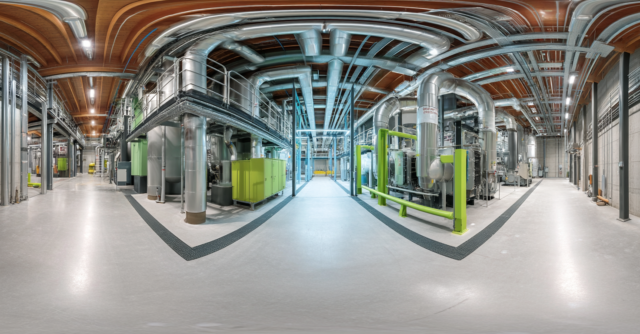
    At the centre of the heating centre is an efficient waste wood boiler with an output of 2,000 kilowatts. A further waste wood boiler, heat pumps and a peak load boiler are also planned, which will generate a total output of up to 10,000 kilowatts.

    A modern heat storage tank with a volume of 160,000 litres will ensure operational efficiency, while a photovoltaic system with an annual output of 220 megawatt hours (MWh) will produce sustainable electricity. 145 MWh of the electricity produced is used for the plant’s own consumption. Using power-to-heat technology, the system converts surplus electricity into heat and thus adapts to fluctuations in the energy system. This leads to particularly efficient energy utilisation, while at the same time supporting the stability of the power grid, explains AEW.

    Once completed, the heating centre will supply up to 14,500 MWh of heat per year and cover the needs of around 700 single-family homes. This will save around 710,000 cubic metres of natural gas and 1,500 tonnes of CO2 per year, explains Daniel Wernli, Head of Heat Production at AEW.

    From planning to construction and operation, AEW has deliberately commissioned companies from the region. The local population will also be involved: in spring 2026, AEW will organise an open day at the heating network and explain how sustainable heat is produced from regional wood.

  • Norman Gobbi points to sustainability in Ticino

    Norman Gobbi points to sustainability in Ticino

    Mr. Gobbi, you have recently been in charge of construction in Canton Ticino. What are your first priorities in this area?
    “In my new role as head of the Construction Division, which I have held since September 1, the priority is to initiate contacts with all the main players in the construction sector in Ticino, in order to understand their view of the current situation and prospects-short, medium and long term.”

    How do you intend to make spatial planning in Ticino more sustainable, particularly in the delicate balance between densification and landscape protection?
    “The canton of Ticino has a very different geographic conformation than the highland cantons. Everything is concentrated in the few square meters of the valley floors, which were already heavily anthropized during the 20th century: this makes it very difficult to reconcile all the functions that the territory has to perform, while ensuring the highest possible degree of sustainability and quality of life. The key lies in forward-looking planning, as well as the patience to remedy, step by step, the mistakes inherited from the past.”

    What role does climate change play in your building policy? Are there concrete plans for climate-resilient building in the canton?
    “Ticino stretches from 200 to over 3,000 meters above sea level and is therefore particularly exposed to the effects of climate change. The State Council is aware of this and has included mitigation of these phenomena among the goals of its long-term program.”

    What is your position on promoting the use of wood and modular construction in public building?
    “More than 50 percent of our canton’s land area is covered by forests. So our interest in promoting the use of this abundant and high-quality resource is obvious. The state is there and will play its part in this area: I also expect creative impulses from our Academy of Architecture and, of course, increasing sensitivity from the private sector.”

    Housing space in Ticino is becoming increasingly scarce and expensive. What strategies will you adopt to create affordable housing?
    “Our constitution entrusts the management of these issues, first and foremost, to the municipalities: I consider this a wise choice, since local authorities have an in-depth knowledge of what is happening on the territory and can therefore react promptly to changes in the housing context. That said, the canton is following the issue very closely and is ready to take regulatory action where it is appropriate to do so.”

    How will it work with municipalities to ensure consistent and uniform spatial planning?
    “The new Federal Law has completely changed the paradigm, and Ticino has incorporated it into its Master Plan: it is clear that-for the reasons related to the conformation of the territory I mentioned-the issue of densification is particularly delicate for our canton. The implementation of this strategy will require a broad debate both among institutions and within society as a whole.”

    In German and French-speaking Switzerland, economic promotions are very active. How much energy does the canton and individual districts, respectively, economic regions invest in positioning, and what are they doing concretely?
    “Ticino is constantly working to position itself as a dynamic region that is open to innovation. We are just under two hours from the economic hubs of Zurich and Milan, and in the future we can aspire to accommodate realities that want to remain connected to the dynamism of these metropolises without necessarily having to suffer the disadvantages in terms of quality of life.”

    What lessons do you draw from your time as safety director for your new role in the construction industry?
    “Attention to safety is a ‘mindset,’ and it helps in all situations in life-especially in professions where people risk serious or even fatal injuries. So it will be a priority for me to strengthen awareness on these issues and try to strive for a construction industry where people can work without ever having to fear for their safety.”

    How do you manage the transition from a heavily safety-focused area to a more technical one?
    “Our militia system encourages us to be ‘enlightened amateurs,’ avoiding overspecialization and maintaining an awareness that the work of the state is not made up of watertight compartments, but of interconnected organs that must work in constant dialogue.”

    Do you see your new role as a long-term task or rather as a temporary solution until the end of the legislature in 2027?
    “As I have said many times, land management is my great passion after institutions.”

  • Power from the parquet floor

    Power from the parquet floor

    Instead of oak, which is becoming increasingly scarce, the project relies on poplar wood, a fast-growing, climate-tolerant deciduous tree that has hardly been used in the parquet market to date. Using “green chemistry” and the incorporation of lignin from the paper industry, the soft poplar wood is compressed and hardened so that its mechanical properties and surface quality are comparable to oak parquet

    This development addresses two challenges at once. Securing the supply of wood under climate change conditions and substituting petroleum-based floor coverings with bio-based, recyclable products. For manufacturers, this also opens up the possibility of transforming regional, previously “second-rate” wood species into high-quality design flooring

    Parquet sensor and energy source
    The second innovative step lies in the integration of piezoelectric functionality. If the wood is elastically deformed when walking, electrical voltage is generated that is too low in its natural state to be of practical use. By embedding Rochelle salt, a by-product of wine production with a strong piezoelectric effect, in a specially structured wood matrix, a hybrid structure is created that delivers significantly higher voltages and yet remains recyclable

    This “salt-in-wood” technology enables parquet slats that act as sensors themselves. They recognize footfall, presence or movement patterns and can generate enough energy to supply wireless sensors or signals locally

    Applications from smart homes to airports
    In the short term, the researchers are targeting sensor applications in smart homes, such as access monitoring on doors and windows or presence-dependent lighting and climate control. In the medium term, the focus is shifting to highly frequented areas such as airports, train stations, shopping centers and cultural venues such as the Tanzhaus Zürich, where millions of steps per year offer considerable potential for energy conversion

    The big challenge now lies in scaling. Material processes, sensor integration, durability and costs must be industrialized in such a way that “Piezo-Parkett” is transformed from a demonstrator into a market-ready product family. A goal that is receiving a boost from industry partnerships and awards such as the nomination for the “Evergreen Prize for Innovation”.

  • Decentralized wastewater solutions are gaining in importance

    Decentralized wastewater solutions are gaining in importance

    In Switzerland, as in other European countries, wastewater from households is disposed of and treated centrally. Wastewater from toilets, kitchens, washing machines and dishwashers are mixed together. This makes recycling much more difficult. In order to reduce this problem, researchers at the Eawag water research institute in Dübendorf are working on possible decentralized solutions, according to a press release.

    The aim of these solutions is to separate the various wastewater streams at the point of origin. They could then be treated on site or nearby and resources such as clean water, nutrients and energy could be recovered. The Water Research Institute has now launched a toolbox to provide architects and construction planners with an overview of technologies and practical applications. Among other things, it presents various examples of implementation. These range from solutions for individual households to wastewater treatment for entire neighborhoods. The toolbox contains three groups of fact sheets ranging from the definition of objectives and the selection of a strategy to possible application technologies.

  • Renewable gas strengthens local supply

    Renewable gas strengthens local supply

    Since October, some of the sewage gas from the wastewater treatment plant (WWTP) of the Aargau and Surroundings Wastewater Association(AVAU) in Telli in Aarau has also been used to supply heat locally. According to a press release, Green Power Aarau AG processes the gas, which is then fed into the natural gas network of Eniwa AG.

    This replaces fossil natural gas with renewable gas. According to the press release, the quantities are currently still manageable. However, they should be significantly increased with the ARA expansion.

    “With this project, we are demonstrating how the by-product sewage gas can be turned into a valuable energy source,” said Hans-Kaspar Scherrer, CEO of Eniwa and Chairman of the Board of Directors of Green Power Aarau AG, in the press release. “The collaboration between AVAU, Green Power Aarau and Eniwa is a strong example of how the circular economy works in practice in the region.” According to Scherrer, the three companies are jointly contributing to a sustainable energy supply and the reduction of CO2 emissions, as well as strengthening local value creation.

  • Central Switzerland’s first alpine solar plant goes online

    Central Switzerland’s first alpine solar plant goes online

    energieUri has connected the first alpine solar plant in Central Switzerland to the grid on the Sidenplangg in the municipality of Spiringen, according to a press release. The plant at an altitude of 1,800 to 2,000 meters is set to generate 12.5 gigawatt hours of electricity per year with a total output of 8 megawatts when fully expanded. Almost half of this will be produced in winter.

    The plant currently supplies 13 percent of the planned electricity. This qualifies it for funding under the Solarexpress program. Work is due to resume in spring and be completed by the end of 2028.

    APV Sidenplangg AG is owned by the Uri-based energy supplier energieUri AG as the initiator and aventron AG, based in Münchenstein BL. “Such power plant projects create and secure highly qualified jobs in the region – be it in the planning, realization or future operation and energy management by energieUri,” says Werner Jauch. CEO of energieUri and Chairman of the Board of Directors of APV Sidenplangg AG, is quoted in the press release.

  • Award for sustainable hospital construction

    Award for sustainable hospital construction

    Baden Cantonal Hospital(KSB) has been honored at the World Architecture Festival in Miami, Florida. The architecture of the new KSB building won a prize in the Health category, according to a press release. The World Architecture Festival was held from November 12 to 14.

    At the event at the Miami Beach Convention Center, 160 international jurors voted on 460 projects. The hospital building realized by Nickl & Partner Architekten Schweiz and other planning partners was recognized for its clear design language, sustainable construction and consistent focus on a healing environment for patients, according to the press release. “This award is an impressive confirmation of our vision: to build a hospital that combines medical excellence and efficient operation with state-of-the-art architecture,” said Pascal Cotrotzo, CEO of KSB. “We are proud that our new building in Miami has received international recognition. Our thanks go to everyone who made this major project possible.”

    KSB already received the European Healthcare Design Award in London in June 2025. In order to show off the entire new building to its full advantage, a green space will be built on the site of the old hospital to connect it to the city. The KSB refers to a complaint by the Aargau Heritage Society against the demolition of the old building and a petition with 7,000 signatures against this complaint.

  • New tracker makes the Swiss power-to-X landscape visible

    New tracker makes the Swiss power-to-X landscape visible

    Renewable electricity can be stored in chemical energy carriers such as hydrogen, synthetic fuel and methane (Power-to-X). According to a press release from the Swiss Power-to-X Collaborative Innovation Network SPIN, more than 50 projects in this area are already underway in Switzerland.

    Together with the Coalition for Green Energy & Storage(CGES), SPIN is therefore launching a tracker that provides an overview of known projects in Switzerland. The resulting map makes visible those projects that have gone beyond laboratory tests and have already become demonstration projects or even commercial applications. SPIN collects the data, CGES visualizes it.

    “The tracker facilitates collaboration by providing a structured database that promotes synergies between stakeholders and supports decision-making,” Christoph Sutter and Antonello Nesci, co-directors of CGES, are quoted as saying in the press release.

    Martin Bäumle sees power-to-X technologies as the key to defossilizing the economy. “With the tracker, we are creating transparency, strengthening collaboration and helping to turn promising ideas into scalable solutions,” said the National Councillor (Green Liberal/ZH) and Co-President of SPIN. “Reliable data can help policy makers to adapt regulations and investors to identify new opportunities.”

    The map will be presented at the CGES annual event, which will take place on November 21 at Swissgrid in Aarau. CGES is a coalition of partners from business, academia and the public sector for green energy, founded by the ETH Domain.

  • Double use of space increases solar power production

    Double use of space increases solar power production

    According to a press release, ARA Thunersee has inaugurated HORIZON, the largest movable solar folding roof in the world. It was realized by the cleantech company dhp Technology from Zizers. With an installed capacity of 3.6 megawatts peak and around 3 gigawatt hours of electricity, the system will supply 700 households.

    According to ARA Thunersee, the more than 20,000 square meter plant is based on technology from dhp Technology. dhp CEO Gian Andri Diem sees great potential in generating energy on existing areas. “This is how we create progress without taking up additional space,” he is quoted as saying.

    According to dhp’s project description, efficient use of space is relevant in order to make progress with the energy transition through photovoltaics. Wastewater treatment plants, logistics areas, waterworks and parking areas are particularly suitable for solar power production due to their previously unused areas. According to Ingo Schoppe, Managing Director of ARA Thunersee, “intelligent land use makes an active contribution to security of supply, economic efficiency and climate protection”.

    The solar folding roof spans several clarifiers and makes double use of existing infrastructure areas – for wastewater treatment on the ground and for solar power generation above. The electricity generated there is intended for wastewater treatment and local supply.

    Based on Swiss cable car technology, the roof is able to react to extreme weather conditions. It folds up automatically in the event of storms, snow or hail. This allows operational safety and energy production to be achieved without having to intervene in ongoing processes.

  • Basel plans consistently climate-friendly and future-oriented

    Basel plans consistently climate-friendly and future-oriented

    Ms. Keller, how do you rate the progress made so far in sustainable urban development and what are your priorities for the coming years?
    We have already done a lot – but there is still a lot to do! We have set an important course with our urban climate master plan and climate protection strategy as well as the associated action plan. In particular, we are taking a comprehensive approach to greening and unsealing as well as reducing CO2 emissions. In addition to reducing direct emissions from operations, my department is also concerned with indirect emissions from the construction of buildings. We are currently examining new approaches here, such as an incentive tax on indirect emissions from construction. We are densifying and converting existing buildings and want to simplify the construction of existing buildings in future by amending the law. These are the guidelines for how we want to promote sustainability in urban development over the next few years.

    What measures are you taking to strengthen building culture in Basel and promote high-quality, sustainable construction?
    Building culture is very important to us: the people of Basel should feel comfortable in their city. Of course, this is also a key basis for achieving the climate targets, which is why a forward-looking building culture is extremely important. A high level of building culture creates identification and quality of life. Both the preservation and further development of existing buildings, the maintenance of traditional building methods and the use of sustainable technologies and buildings make a significant contribution to this. Building culture is sustainable and sustainable planning must become an integral part of building culture. Incidentally, this is also very well illustrated in our “Basel Compass”, where building culture is mentioned and addressed as one of the first points.

    What contribution can the Department of Construction and Transport make to the circular economy in order to achieve the goal of net zero by 2037?
    Basel-Stadt has an ambitious strategy to promote the circular economy in the construction sector. This means that we want to design buildings and construction products in such a way that they can be used for as long as possible and are made from reused or recycled materials. An important focus is on continuing to build and use existing buildings instead of demolishing and rebuilding them. This not only reduces waste, but also cuts the greenhouse gas emissions that are normally generated during the production of new building materials. New buildings should also increasingly be constructed in such a way that they can be dismantled and made available as building material for the next structure at the end of their useful life (design for disassembly). Basel-Stadt also promotes the use of recycled materials in the construction process, such as recycled asphalt for road surfaces. We are working to create a legal framework to facilitate circular construction and we are investing in the infrastructure needed for the reuse and recycling of building materials. For example, the canton has set up its own building materials warehouse: Cantonal deconstruction material is recorded in an online construction parts catalog and made available for reuse in other projects. With these measures, we not only want to improve our carbon footprint, but also promote innovation in the construction sector.

    What are the next steps in the “green asphalt” project and how do you assess the climate protection potential of this innovation?
    The use of green asphalt on road construction sites in Basel is developing well. Within the city, green asphalt has been used on at least eight larger and smaller construction sites. Examples include Burgfelderstrasse, Freiburgerstrasse and the Eselweg. Further projects are currently underway in which the use of green asphalt is planned. However, green asphalt does not directly reduce CO2 emissions. However, thanks to biochar, green asphalt binds more CO2 from the atmosphere than it releases during production. In this way, we can reduce the climate impact of road construction. However, it is not yet a sure-fire success. There are still critical manufacturers and associations. We must continue to seek dialog and highlight the opportunities.

    What are currently the biggest challenges in maintaining and modernizing the public infrastructure in Basel?
    The challenges are many and varied. One key aspect is the need to regularly renovate existing infrastructure such as roads, bridges and streetcar tracks in order to ensure a reliable supply of water and energy. At the same time, IWB is expanding the district heating network by a total of 60 kilometers by 2037 on behalf of the canton of Basel-Stadt. This requires close coordination with the other renovation work in order to minimize the impact on residents and at the same time take the opportunity to redesign the urban climate and active transport. After all, climate change is also a challenge. On the one hand, we need to prepare the city for heat waves and extreme weather events. To avoid heat islands, we need to unseal asphalt surfaces and create green and water areas in public spaces. On the other hand, the canton has set itself an ambitious climate protection target of net zero by 2037. We are therefore increasingly focusing on renovating buildings and converting existing buildings, for example, and are focusing on sufficiency, reducing grey energy and minimizing operating energy consumption.

    To what extent is digitalization, for example with new apps for passengers, part of your strategy to increase the attractiveness of public transport in Basel?
    Digitalization is very important for public transport. Passengers want to use the app to find out about timetables or any service disruptions and also buy their tickets conveniently. Digitalization is also key when it comes to sharing and combining different vehicles. Many of us combine our streetcar or bus journey with a rental vehicle: depending on where we live, we take a rented bike, scooter or car to the stop or from there to our destination. The majority of us already book or pay for these rental vehicles digitally. The aim must be to have digital solutions that conveniently connect all these services. The big breakthrough has not yet been achieved; there are many players and challenges along the way. But we are working on solutions.

    What are currently the biggest challenges in cross-border coordination with the canton of Baselland and neighboring countries with regard to public transport?
    In our region, we are all used to crossing cantonal or national borders every day. Accordingly, we also plan a lot of things together across borders in the region – especially when it comes to mobility. Many streetcar and bus lines operate both in the Basel region and in Basel. We also have two cross-border streetcar lines – one from Basel to St. Louis (F) and one from Basel to Weil am Rhein (D). These are very successful and are well used, but financing the maintenance and operation of the sections in the neighboring countries is a challenge. However, the biggest challenge at the moment is probably not so much coordination within the region, but the fact that we as a region are sometimes not sufficiently recognized by the federal government. The current discussions surrounding the urgently needed rail expansion in Basel demonstrate this. I am grateful that we in the region are all pulling together and fighting for a tri-national S-Bahn that is worthy of the name. A continuous S-Bahn system has great potential for shifting journeys from road to rail.

    What is your concrete timetable for converting the entire bus fleet to electric drive by 2027 and what challenges still remain?
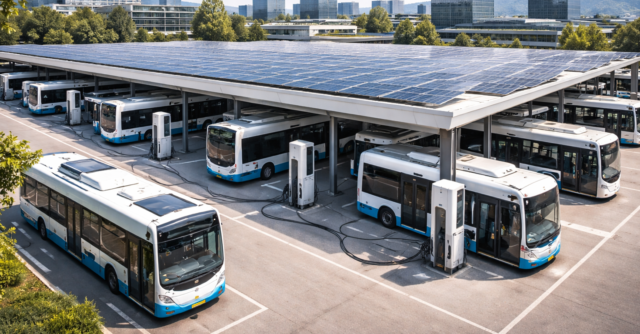
    This conversion is in full swing and on track. Around half of BVB buses are already electric. Basler Verkehrs-Betriebe will convert its entire bus fleet to e-buses by 2027. BVB is thus making a significant contribution to helping Basel achieve its ambitious climate targets.

    You are heavily networked in national bodies. What trends or best practices from other cities and regions inspire you for Basel in particular?
    The exchange with other cities is always enriching. They all struggle with the same challenges, such as conflicting objectives in tight spaces. I am watching the pilot tests with autonomous public transport services in other cities with interest. As President of the Urban Mobility Conference, it is important to me that we set the right course in this area at an early stage and are equipped for new challenges such as autonomous vehicles. Such new developments should be a win-win situation for all sides. However, this requires certain framework conditions.

    Is there anything you would like to see in Basel? Something from other cities around the world that has impressed or inspired you?
    When you look at Asian cities, you are sometimes impressed by the speed at which projects are realized, especially in building construction and civil engineering. On the other hand, I am very grateful that we have democratic processes in Switzerland, which are lengthy but ensure that people are involved and can have an influence. I am convinced that this participation – whether via parliament or directly via the population – is a key to greater acceptance and therefore also to social cohesion.

  • La Rasude Lausanne

    La Rasude Lausanne

    La Rasude is one of Lausanne’s six urban transformation poles and is located directly next to the train station and one of the most important public transport hubs in French-speaking Switzerland. From the city’s point of view, this is the ideal location for densification that combines short distances, high density of use and a better quality of life. The plan d’affectation defines the permitted uses, building volumes and requirements for the environment, mobility and monument protection

    Building on existing buildings instead of tabula rasa
    Around 70 percent of the existing buildings will be preserved, including the striking building on Avenue de la Gare designed by Alphonse Laverrière, whose protection was explicitly secured in a revised project following criticism from the federal government and experts. Individual buildings such as “Gare 45” and “Horizon” may be raised by two storeys, and two new structures will be added. One along the tracks and one in the district center, the heights of which are defined in such a way that the existing skyline and visual references are respected and the Edipresse tower is not towered over

    Living, working and social mix
    Around 30 percent of the floor space is earmarked for housing, at least 20 percent of which will be logements d’utilité publique, i.e. non-profit apartments. In total, almost 500 people will be able to live in a district that is currently uninhabited. At the same time, a diverse mix of uses will be created, including offices, a hotel, stores, early childhood care, cultural and leisure spaces and neighborhood services. Around 500 square meters will be reserved for cultural professionals and public uses at controlled, affordable rents

    Public space, greenery and mobility
    The currently closed, heavily sealed complex will be transformed into an open, pedestrian-oriented quarter. Around half of the site will be available as public space in future, much of it with trees and green areas, supplemented by green roofs, photovoltaic systems and a connection to renewable heat sources to significantly improve the carbon footprint. Access on the surface is primarily on foot and by bicycle, while an underground garage with around 275 car parking spaces and around 1,200 bicycle parking spaces bundles the necessary mobility options underground

    Political process and outlook
    The plan is available for public inspection until December 18. Objections and objections will be incorporated into the further revision before the decision is taken by the municipal council to the canton. In parallel, competitions for architecture and public spaces with participatory formats are planned to ensure the quality of implementation. Construction is currently scheduled to begin around 2029, with the new district coming into operation in stages between 2031 and 2033, provided that any political referendums do not change the timetable.

  • From the depot to a climate-resilient urban district

    From the depot to a climate-resilient urban district

    The starting point for the development is the withdrawal of the CKW depot in the context of the large-scale transformation around Seetalplatz. Based on a two-stage study commissioned by CKW and the city of Lucerne, the “Habitat – Quartier im Hain” project was selected in 2022. The careful handling of existing buildings was decisive. In particular, the Shedhalle and the consistent integration of open spaces and rainwater management.

    The ideas of the winning project were then applied to the entire perimeter of the development plan and enshrined in planning law. The result is a coordinated overall figure that combines private properties and the former factory yard area into an urban development whole.

    Urban development, mixed use and sponge city
    For reasons of noise and urban space, the north-eastern part of the area is characterized by larger, mixed-use buildings in closed construction. Living, working, services and first floor uses are concentrated here along streets and squares. The western part focuses on open residential buildings, connected green spaces and paths that link the adjacent neighborhoods.

    The central element is a topographical depression in the west, a former floodplain. It serves as a retention area for rainwater and forms the basis of the “urban grove”, which characterizes the district with trees, infiltration areas and a cooling microclimate. Rainwater management, climate-adapted open space design and the sponge city principle thus become key components of the district’s identity.

    Social mix and diversity
    When completed, around 700 to 800 additional apartments are planned for Reussbühl West, at least 20 percent of which will be non-profit. They will be supplemented by multi-purpose rooms and around 15,000 to 18,000 square meters of work space for businesses and services. Short-term rentals will be limited to the areas already available today and are only permitted in construction site C9. This is a deliberate signal in favor of long-term residential and neighborhood structures.

    The existing shed hall will be opened up for public-oriented uses and will function as an address for culture, leisure or small-scale businesses. Together with the first floor uses of the new buildings, a mixed-use, all-day lively environment will be created that closely interlinks living, working and public facilities.

    Legal planning basis and timeline
    The “Reussbühl West” development plan sets out the main elements of the urban design and the distribution of uses in a way that is binding on the landowner and allows for staggered implementation. It is open to the public from November 24 to December 23, 2025. Objections and negotiations will be incorporated into further processing before the plan is submitted to the City Council.

    Together with the “Reussbühl Ost” development plan, which is already legally binding, this will create a legal planning framework for an upgraded, mixed-use district with a total of around 1,000 additional apartments and 15 to 20 percent commercial space. The densification will take place gradually. The first non-profit apartments and new commercial space are already under construction in Reussbühl Ost, marking the transition from an industrial area to the urban city building block of the next generation.

  • Earth architecture as a model for the building of tomorrow

    Earth architecture as a model for the building of tomorrow

    The pit and cave dwellings in the Chinese Loess Plateau date back to Neolithic settlements and are considered a living fossil of the history of residential construction. Despite the limited lifespan of individual buildings, the principle of the dug-in courtyard house has been preserved for thousands of years and shaped the lives of millions of people.

    Historically, the underground courtyard complexes were mainly used by the rural population, but later political figures such as Mao Zedong and Xi Jinping also lived in such cave houses for a time. The settlement structures range from individual courtyards to almost invisible, interconnected underground village networks.

    Loess as a building material and building physics carrier
    Load-bearing, yet easily workable loess soil forms the basis of this architecture. Living and ancillary rooms are cut directly into the natural soil, usually without elaborate supporting structures or industrially produced building materials. The construction costs are significantly lower than those of conventional houses.

    The central pit courtyard, up to ten meters deep and eight to twelve meters on a side, provides access, light and ventilation at the same time. The courtyard level is reached via ramps or stairs, while drainage pits collect rainwater and prevent flooding.

    Thermal inertia as a climate machine
    The strength of the Dikengyuan lies in the consistent use of the thermal inertia of the earth mass. In summer, the earth cover keeps the heat out and stabilizes the interior temperature at around 14 degrees Celsius, while in winter the stored geothermal energy acts as a buffer against low outside temperatures.

    In this way, the houses function as largely passive climate systems that do not require heating or air conditioning. The construction method is therefore not a folkloristic relic, but an early, highly effective model for energy-efficient construction adapted to the local climate.

    Inspiration for energy-efficient architecture today
    The Dikengyuan opens up important approaches for managers and experts in planning and the real estate industry. Local materials, reduced technology, robust building physics and the integration of buildings into the ground as a climate envelope. In the face of net-zero targets and resource scarcity, they show what resilient, cost-effective forms of housing can look like beyond highly complex building technology.

    The challenge is to translate these principles into contemporary typologies, standards and construction processes, from partially buried buildings to hybrid solutions in dense urban contexts. In this way, millennia-old earth architecture becomes a laboratory for future-oriented, climate-resilient construction.

  • Modernisation of the drinking water supply in Kopfholz

    Modernisation of the drinking water supply in Kopfholz

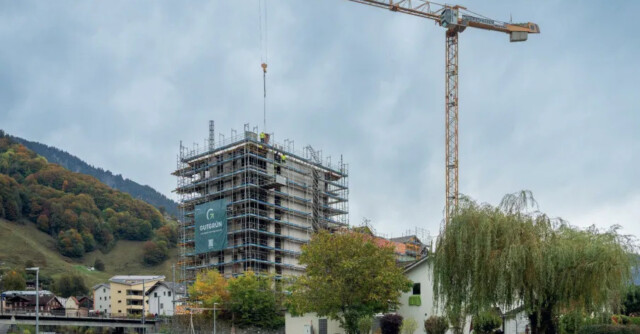
    The Schlieren-based construction company STRABAG has begun dismantling and rebuilding the Kopfholz reservoir on behalf of the municipalities of Horgen, Thalwil, Rüschlikon and Kilchberg. According to a statement from STRABAG, the modernisation project is intended to secure the local drinking water supply until 2050. In order to ensure a continuous supply of water, three construction phases are planned for the planned replacement construction. The first construction phase is to be completed by February 2026, with the project scheduled for completion in March 2027.

    According to the press release, the municipalities have been operating a joint water supply since 1905. The connection will be continued with the project, which the municipalities believe sends a “strong signal for a sustainable, safe and future-oriented water supply”. Rüschlikon’s storage capacity is expected to increase from 1000 to 1600 cubic metres, and Kilchberg’s from 1500 to 2800 cubic metres.

    The press release emphasises the particular challenge faced by the construction teams from the four clients in building the reservoir during ongoing operations. “The reservoir supplies more than 6,000 households with drinking water and the supply must be guaranteed at all times,” Beat Spörndli, Construction Manager, Civil Engineering and Road Construction North-East, is quoted as saying. He also emphasised the “high demands on coordination and hygiene on the construction site”. In addition to compliance with SIA standards (Swiss Society of Engineers and Architects), the use of a special drinking water concrete is a prerequisite. As the construction is subject to the Foodstuffs Act, germ-free water storage must be ensured. The close cooperation between the municipalities enables coordinated planning, minimises interference with the forest area and triggers synergies in tenders and construction processes.

  • Sustainability firmly anchored, dialog stagnates

    Sustainability firmly anchored, dialog stagnates

    In 2025, the proportion of sustainability criteria in public procurement rose to 47.6%. An increase of 136 percent compared to the previous year. This means that the focus is clearly shifting away from purely price-oriented evaluations towards qualitative, life cycle-related approaches.

    At the same time, other qualitative criteria stagnated at 53.1 percent. The proportion of dialog procedures (1.1%) and approved variants (12.2%) has almost halved compared to 2024. This development points to a trend towards simplification in the process, but also to growing uncertainty among many procurement bodies when dealing with open, creative formats.

    New perspective on cultural change
    For the first time, the report sheds light on the “drivers of cultural change”. The new evaluation measures which indicators have increased the most since the revision of procurement law at federal and cantonal level, weighted according to model quality and number of observations. A focus on reliable data should show where sustainable change is actually measurable.

    The federal government and Basel-Stadt are leading the way
    The federal government is proving to be particularly dynamic. At the end of the second quarter of 2025, it achieved 46 model quality points, with top scores for quality, sustainability and service plausibility. The Confederation is followed by Basel-Stadt (34 points), which has made above-average progress despite implementing the reform later. The increase in variants contrary to the national downward trend is remarkable.

    Fewer indicators, more focus
    The current report has also been methodologically streamlined. Instead of ten, it now comprises seven indicators. Innovation and price reliability are no longer included due to a lack of reliable data, and project and ideas competitions are assessed together. The focus is therefore clearly on those factors that actually support cultural change. Sustainability, quality and transparency.

    Trend towards consolidation instead of opening up
    The latest results point to a phase of consolidation. Sustainability has become established, but the dialogic aspect of the new procurement law is only being used hesitantly. While individual regional authorities such as Basel-Stadt are experimenting in a targeted manner, a reversion to traditional patterns is evident at national level.

    This means that the sector is at a point where the reform is now being implemented in depth. A genuine change in culture will only fully unfold when dialog, diversity of variants and qualitative evaluation are understood as integral components of strategic procurement.

  • Ticino shows the way to a modern power supply

    Ticino shows the way to a modern power supply

    The European energy system is facing the biggest transformation in its history. Transport, industry and buildings are being electrified, electricity demand is increasing massively and production is becoming more decentralised and volatile. For Switzerland, this means fundamentally adapting its grids. In Ticino, the course was set early on. As early as 2013, the canton brought together the major players, Swissgrid, Azienda Elettrica Ticinese (AET) and SBB, to think about electricity grids and spatial planning together.

    The analysis clearly showed that the infrastructure created in the 1950s was inefficient. Each institution had built its own lines without taking into account the overall view or the landscape. The result is a patchwork of routes through sensitive areas. Today, joint planning makes it possible to bundle several lines on one route, resulting in 140 kilometres becoming superfluous.

    Projects with national appeal
    At the heart of the realisation are three major projects, Airolo – Lavorgo in the Leventina, All’Acqua – Vallemaggia – Magadino and Lavorgo – Magadino in the Riviera and Piano di Magadino. They form the backbone for a secure supply for future generations. At the same time, they create the conditions for the dismantling of old lines, which significantly relieves the landscape.

    Lengthy procedures act as a brake
    The construction of new high-voltage lines in Switzerland often takes more than 15 years. However, close consultation in Ticino has made it possible to develop trust, coordination and joint proposals to speed up federal procedures. Municipalities and the population are actively involved in order to achieve broad-based solutions.

    Balancing landscape protection and security of supply
    Ticino combines sensitive habitats, historic villages and landscapes with lakes and mountains that are important for tourism. The balancing act between security of supply and landscape protection has been mastered here in an exemplary manner. Instead of unilaterally planning power lines, the territory is viewed as an overall system. An approach that increases acceptance and reduces conflicts.

    Federal Council wants to expand the model
    The innovative process has not gone unnoticed. The Federal Council has recognised the advantages and proposed extending the Ticino model to other cantons in a bill. This could turn a regional pioneering achievement into a national model of success, with a signalling effect for the entire energy transition.

    Ticino shows how the modernisation of critical infrastructures can succeed in a way that is technically efficient, compatible with the landscape and politically acceptable to the majority. The dismantling of 140 kilometres of power lines is only the most visible success. The decisive factor is a new way of thinking that strengthens security of supply and quality of life in equal measure.

  • Launch of sustainable energy network in Urdorf

    Launch of sustainable energy network in Urdorf

    The official ground-breaking ceremony in the municipality of Urdorf marked the start of construction of the Urdorf energy network. In collaboration with Energie360°, it will supply up to 150 properties belonging to private individuals and municipal facilities with regional thermal energy for heating and hot water from autumn 2026, according to the energy supplier.

    To this end, an energy solution will be implemented that utilises heating energy from wood chips and waste heat from the Dietikon waste incineration plant. According to Energie360°, the climate-friendly heating strategy reduces dependence on fossil fuels and price fluctuations. Around 4000 tonnes of CO2 can be saved in Urdorf every year.

    More than 1500 households could benefit from the connection, it says. By taking the step towards a sustainable energy supply, the municipality is fulfilling a “role model function in the area of energy and the environment”, according to municipal president Sandra Rottensteiner.

    The network is a relevant component of regional energy planning on the way to becoming a climate-neutral municipality. Urdorf wants to achieve the goal of climate neutrality by 2050. Heat from wood chips and waste incineration plants is seen as a climate-friendly, regional alternative to heat from fossil fuels.

    Energie360° is organising an information event for citizens. On Monday, 10 November 2025 from 6 pm, interested parties can learn about the current status of the Urdorf energy network and find out how they can connect to the property. This information evening will take place in the Embrisaal (Im Embi 8) in Urdorf.

  • Further training for modern fire protection expertise

    Further training for modern fire protection expertise

    The Technopark Zurich-based AFC Academy, which claims to be a leader in training and further education in the areas of fire protection, safety and building technology, has developed the BSV 2026 retraining concept, which prepares specialists for the new BSV 2026 fire protection regulations, according to a press release.

    In Module A of the training programme, the academy provides an overview of the key innovations of BSV 2026 at fire protection specialist level and practises drawing up plans and concepts in accordance with the regulations. Module B, on the other hand, teaches the practical application of the new requirements and documentation methods at fire protection expert level.

    According to the AFC Academy, the new fire protection regulations BSV 2026 mark a fundamental change in Swiss fire protection and significantly increase the requirements. Risk-based verifications are replacing standard solutions and make in-depth knowledge of structural, technical and organisational contexts essential. As fire protection is becoming an integral part of architecture, utilisation, operation and technology, it is necessary to work together on all these levels – interdisciplinary thinking is therefore becoming crucial, according to the Academy. In future, clear communication will also be required: specific requirements for documentation, quality assurance and enforcement must be clearly communicated to clients, authorities and project partners.

    The AFC Academy has been offering training programmes for fire protection, sustainable construction, safety and building technology since 2016.

  • Basel-Landschaft awards licences for hydropower

    Basel-Landschaft awards licences for hydropower

    The canton of Basel-Landschaft has included six locations for new small hydropower plants on the Birs and Ergolz rivers in the cantonal structure plan, the Basel-Landschaft Department of Construction and Environmental Protection announced in a press release. The designation was made in accordance with a corresponding requirement of the Federal Department of the Environment, Transport, Energy and Communications. In Switzerland, small hydropower plants are defined as plants with an output of up to 10 megawatts that use the energy of small rivers for decentralised electricity generation.

    The Cantonal Office for Environmental Protection and Energy(AUE) is responsible for awarding licences. The exact locations of the planned hydropower plants can be found in the press release. Interested companies are invited to submit a request for information online. The AUE will then determine the award procedures for the individual sites.

    The canton of Basel-Landschaft has set itself the goal of covering 70 per cent of its energy consumption, excluding mobility, from renewable sources by 2030. The planned six small hydropower plants should contribute to the realisation of this goal.