Category: Switzerland

  • FORUM UZH Centre for Education and Research

    FORUM UZH Centre for Education and Research

    The FORUM UZH is a milestone for the structural and academic development of the University of Zurich. The new building comprises a total of 37,000 m² of usable space and will not only accommodate the predicted growth in student numbers, but also set new standards in teaching, research and sustainability. The new centre will bring together the faculties of law, economics and modern philology. These will be complemented by modern libraries, sports facilities for secondary schools and the Academic Sports Association as well as publicly accessible cafeterias and commercial areas.

    Architecture and spatial concept
    The FORUM UZH consists of a terraced base for teaching and university life, a trapezoidal structure hovering above for research and a central courtyard. The structure is set back from Rämistrasse to create a spacious front zone with city balconies that blends in with the urban surroundings. The façade design with horizontal ceiling panels and vertical brise soleils gives the building a striking depth effect and allows for flexible light regulation inside.

    At the centre of the building is the eponymous Forum, a light-flooded hall that is a lounge, meeting and work space all in one. It connects all levels and can be used for university and public events for up to 2,000 people.

    Flexible learning environment and modern infrastructure
    The FORUM UZH offers a variety of innovative teaching and learning spaces. Five lecture theatres and several seminar rooms can be used flexibly and are equipped with state-of-the-art technology to enable hybrid teaching models. There will also be a spacious teaching and learning centre with over 700 student workstations. The university library will be united under one roof on the upper floors.

    Sustainability and innovative construction
    The FORUM UZH is based on a sustainable timber-concrete hybrid construction method that reduces CO² emissions while offering a high quality of stay. The intensively greened roof not only serves as a fifth façade, but also as an ecological compensation area with a habitat for flora and fauna. A photovoltaic system supplies its own electricity, while over 50 large trees on the redesigned town square have a positive impact on the microclimate.

    Thanks to the modular design, UZH saves as much CO² as would be released by the construction of 77 detached houses. The building will be certified in accordance with the SGNI Gold standard and Minergie P.

    Integration into the urban environment
    The FORUM UZH will not only be open to the university community, but also to the city’s population. The libraries, catering areas and neighbourhood shops will be open to the public and the Gloriaterrasse will be a green meeting place where people can linger. The urban design will create a direct link between the university quarter and the surrounding neighbourhoods.

    Construction schedule and next steps
    Following the completion of the preliminary project, construction work began in August 2024. Completion is scheduled for 2028 and the building will be occupied in 2029. Until then, students and researchers at the University of Zurich will be able to follow the development of this project of the century at close quarters.

  • More efficient cleaning solutions for construction and industry

    More efficient cleaning solutions for construction and industry

    According to a press release, the Frutiger Company based in Winterthur had a successful week at the Bauma trade fair in Munich with a lot of professional exchange. Many visitors took advantage of the world’s leading trade fair for construction machinery, building material machines, mining machines, construction vehicles and construction equipment to find out about the newly structured product range.

    There was particular interest in the MobyDick On tire washing system produced by Frutiger, a joint development with the Swiss Federal Institute of Technology in Zurich, according to the press release. With its flow-optimized geometry and innovative nozzle positions, it sets new standards in terms of efficiency and washing power.

    In addition to manufacturing MobyDick tire washing systems, Frutiger specializes in cleaning systems for dust control and rough cleaning of wheeled and tracked vehicles and other construction machinery (demucking).

    All three divisions were on display at Bauma, newly divided into the Standard Line and the Tailor Made Line. The new structure of the portfolio allows for the fast and efficient provision of standardized solutions for common requirements and tailor-made systems for individual challenges.

    Adaptive MobyDick systems were presented as an innovation in dust control. They have been expanded to include self-sufficient variants and offer improved flexibility on platforms with an integrated generator and water tank or on mobile towers. Frutiger also demonstrated a complete demucking system for cleaning construction and military vehicles. The solution helps to save costs for personnel, downtime and water consumption.

  • Opening of the sound house at Schwendisee

    Opening of the sound house at Schwendisee

    With the Klanghaus, Toggenburg has gained a cultural landmark that radiates far beyond the region. Built from wood and embedded in the pre-Alpine landscape, the Klanghaus is not only an acoustic space, but also a platform for encounters, creativity and sound research. Four specially designed sound rooms and two outdoor stages offer space for rehearsals, concerts, workshops and sound experiments, open to professionals and amateurs alike.

    From idea to reality
    The vision of a building that makes sounds audible and tangible was sealed in 2019 with a referendum. After intensive political and social preparatory work, construction work began in 2022. With investments of 23.3 million Swiss francs, a project was realized that embodies progress in rural areas in an exemplary manner. The Klanghaus is an expression of courage and appreciation for the cultural heritage and innovative spirit of Klangwelt Toggenburg.

    More than just a building – an impulse for the region
    The Klanghaus has an impact beyond the artistic sphere. It strengthens cultural tourism, creates resonating spaces for new guests, revitalizes local businesses and inspires people to engage with sound, space and identity. As a bridge between tradition and modernity, it promotes social dialog in the heart of nature.

    Opening with a variety of sounds and encounters
    The public is invited to the grand opening weekend on May 24 and 25, 2025. The highlight is a music marathon with twelve hours of live concerts, from yodeling and gospel to youth music and indie rock. Admission is largely free and the Klanghaus will be an experience for everyone.

  • Zurich housing protection initiative increases value at risk for real estate portfolios

    Zurich housing protection initiative increases value at risk for real estate portfolios

    In February 2024, the Zurich housing protection initiative was submitted with over 20,000 signatures. Initiated by the Tenants’ Association, SP, Greens and AL, it is intended to give municipalities more leeway to intervene in the housing market in future. The vote is planned for 2026. However, property owners should already be analyzing the potential effects on their portfolios.

    Flexible framework with unclear consequences
    The cantonal bill is limited to framework definitions. Municipalities are given the right to define temporary rent caps in the event of housing shortages, conversions, demolitions or conversions into property. Whether and how these are implemented is at the discretion of the municipalities. Any municipal decree would be subject to a referendum. However, based on examples such as Basel-Stadt or Geneva, many municipalities are likely to adopt similar instruments.

    Risks to value retention and investment momentum
    The potential “value at risk” for real estate portfolios lies in restrictions on rent adjustments, uncertainty in project development and a declining willingness to invest. Experience from other cantons shows that rent caps dampen new construction and renovation activities, which can lead to supply bottlenecks and the erosion of residential quality in the medium term. Existing properties in tight markets are particularly affected.

    Strategies required to minimize risk
    For institutional investors, a differentiated scenario analysis is recommended, which takes into account possible reductions in value as well as tax and regulatory consequences. Strategic diversification, active asset management and timely communication with local authorities will be crucial in order to secure room for maneuver.

  • How efficiently do heat pumps work

    How efficiently do heat pumps work

    Heat pumps are considered a key technology for the energy transition in the building sector. But how efficiently do they work in everyday life? Researchers at ETH Zurich have analyzed 1023 systems in ten European countries over a period of two years as part of the largest field study to date. The results show that actual efficiency varies greatly, with a number of dramatic deviations from the technical standards.

    Misconfiguration and oversizing
    Many heat pumps are incorrectly set up or oversized. The heating curve is often set too high, night setbacks lead to unnecessary additional heating and high heating limits extend running times. In Switzerland, 41% of the systems tested were found to have an excessive temperature range. 17 % of the air source heat pumps in the international study were even below the applicable efficiency standards.

    Digital tools as a solution
    The researchers are calling for uniform European standards for the digital monitoring of heat pumps. Intelligent control systems and algorithms could continuously analyse operating efficiency and provide suggestions for optimization. Initial pilot projects with smart meters and AI-supported data evaluation in Switzerland confirm this potential.

    Efficiency increases acceptance
    Efficient operation not only reduces electricity consumption, but also increases confidence in the technology. This is crucial for establishing heat pumps as a climate-friendly solution across the board. The ETH studies show that the technology is ready; what is needed now are standards, monitoring and greater awareness of its operation.

  • Cyber threats require cross-border solutions

    Cyber threats require cross-border solutions

    Cyber attacks are increasing in their sophistication and reach. The latest BACS semi-annual report shows how perpetrators operate internationally and what methods they use to bypass filters and reach new victims. Over 62,000 reports of cyber incidents were received in 2024. Private individuals are particularly frequently affected, but companies are also increasingly reporting CEO fraud, phishing and fraudulent prize draws.

    New technologies, new tricks
    Attackers are adapting. Instead of traditional text messages, they use RCS and iMessage to bypass security mechanisms. Deceptively genuine fake calls or the targeted flooding of email accounts with spam are now also part of the repertoire. Criminals do not shy away from misusing well-known brand names for their own purposes and spreading malware.

    Digital dependencies as a risk
    Global incidents such as the faulty CrowdStrike software update, which affected over 8.5 million systems, show just how fragile the digital infrastructure is. Delays in security standards such as the CVE program also underline the risks of one-sided technological dependency.

    Swiss response Mandatory reporting
    On April 1, 2025, the statutory reporting obligation for cyberattacks on critical infrastructure came into force in Switzerland. Operators in the energy, transport, administration and healthcare sectors are obliged to report serious attacks to the BACS within 24 hours. The regulation has been closely coordinated with international standards and EU directives and strengthens cross-border cooperation in the event of an emergency.

    Early warning through international networking
    In order to better manage global risks, Switzerland is intensifying bilateral exchanges with partner countries and organizations. The aim is to achieve an efficient, internationally coordinated flow of information on current threat situations and robust protection for critical infrastructures, both nationally and internationally.

  • Swissgrid invests in the grid of the future

    Swissgrid invests in the grid of the future

    The transmission grid is the basis for a secure electricity supply in Switzerland and its importance is growing. Decarbonization, decentralization and digitalization are fundamentally changing the energy system. Swissgrid is responding to these developments with the “Strategic Grid 2040” project and has identified 31 key projects that need to be implemented by 2040. Around CHF 5.5 billion is to be invested in the expansion, modernization and controllability of the grid.

    Growing demands on the grid
    The transformation of the energy supply is leading to new burdens. Electricity consumption is rising sharply due to heat pumps, electromobility and data centers. At the same time, feed-in from volatile, decentralized sources is increasing. International electricity flows are increasing due to wind farms and solar farms in Europe. To meet these challenges, Swissgrid is focusing on targeted grid reinforcements, new phase-shifting transformers to control electricity flows and the comprehensive renovation of existing infrastructure.

    Planning with foresight and consideration
    The NOVA principle (grid optimization before grid reinforcement before grid expansion) is at the heart of the strategy. The grid is only expanded when all other options have been exhausted. This minimizes costs and environmental impact. At the same time, coordinated planning with cantons and partners and early involvement of the public will increase acceptance and speed up the planning process.

    Networking beyond national borders
    Swissgrid is not only planning for Switzerland, but also for the European energy future. A closer connection to the European grid and integration into a future supergrid should help to transport electricity more efficiently across continents. A regulated electricity agreement with the EU remains crucial for this integration.

  • Digitally visible, locally present

    Digitally visible, locally present

    In the digital world, two aspects remain as relevant as they are challenging: visibility and proximity. Their successful implementation is the key to success, especially for real estate professionals. This is because both sellers and buyers, as well as estate agents, often have regional roots.

    At the same time, this presents an opportunity that SMG Real Estate’s Visibility can put into practice in the best possible way. The innovative solution places real estate agencies exactly where potential sellers are particularly present – in combination with a focus on the desired region. For as little as CHF 99, Visibility helps agencies to present themselves in the best possible light on ImmoScout24 and Homegate. This makes them visible where current and potential sellers are looking for reliable partners. This not only increases their reach in the relevant region, but also strengthens the professionalism of their presence – which leads to more sales mandates. In addition, visibility is maintained permanently, even if no advertisements are placed temporarily.

    Find out more:

    swissmarketplace.group

  • District heating reaches castle on the rock

    District heating reaches castle on the rock

    BRUGG Pipes, based in Kleindöttingen, connected Vaduz Castle in Liechtenstein to a district heating network via its flexible pipe system in spring 2025. According to a press release, the logistical challenge was overcoming the steep slopes from the base station to the castle.

    When laying the 300-metre-long pipeline, a height difference of 120 meters had to be overcome to reach the castle, which is located on a rocky terrace. The installation was carried out using helicopters. The FLEXWELL-FHK pipes used were fixed to holding points previously anchored to the rock. “This innovative method made it possible to overcome the challenges of the terrain safely, quickly and efficiently,” said Daniel Schneider, Sales Manager District Heating Switzerland at BRUGG Pipes, in the press release.

    The castle grounds and the adjacent buildings will be supplied with district heating from VfA Buchs in future. The district heating will be supplied by the waste incineration plant of the Verein für Abfallentsorgung (VfA) in Buchs SG. in 2023, around 200,000 megawatt hours of district heating energy were generated and supplied here, which corresponds to the amount of energy from burning 12.5 million liters of heating oil, according to the press release.

  • New AI agents to increase efficiency in real estate consulting

    New AI agents to increase efficiency in real estate consulting

    PriceHubble AG wants to set new standards for the finance and real estate industry. To this end, the Zurich-based company specializing in digital solutions for the finance and real estate industry has launched three specialized AI agents. “They combine high-quality real estate data with automation and generative AI”, PriceHubble explains in a press release.

    The AI agent PriceHubble Companion provides advice and personalized insights into real estate. The PriceHubble Copilot supports work processes from valuing a property to answering complex customer inquiries. The PriceHubble Analyst is trained to recognize and interpret trends and developments. Each of the three agents can be customized and integrated into existing internal processes.

    With the three new agents, PriceHubble aims to support banks, asset managers, property managers, portfolio managers and real estate agents in overcoming specific challenges. “AI agents are the logical next step – for us and for the market,” said Stefan Heitmann, CEO and founder of PriceHubble, in the press release. “Accurate, transparent data combined with sophisticated, customizable solutions are the key to excellent customer experiences, more efficient advice and real ROI in finance and real estate.”

  • Takeover strengthens charging infrastructure in the e-mobility market

    Takeover strengthens charging infrastructure in the e-mobility market

    AVIA VOLT Suisse AG acquires the charging infrastructure provider Plug’N Roll and expands its charging infrastructure by 2345 charging points. Plug’N Roll customers benefit from access to a Europe-wide network of over 850,000 charging points. Graubünden-based Repower AG, the previous owner of Plug’N Roll, is realigning its focus with Repower E-Mobility.

    According to a press release, AVIA VOLT is now reviewing Plug’N Roll’s contracts and business processes. Its 24,600 customers will be seamlessly integrated into the AVIA network. The takeover will enable integrated billing of electrical and fossil energy for Plug’N Roll fleet operators. According to the press release, AVIA VOLT’s system architecture offers compatibility with the software and hardware solutions of many manufacturers.

    AVIA VOLT, based in Frauenfeld, is a subsidiary of several Swiss AVIA companies. It sees the takeover as an important step towards establishing itself as a leading service provider in the field of electromobility. “For us, the takeover means a targeted strengthening of our position as a provider of reliable charging infrastructure in Switzerland,” said Martin Osterwalder, Chairman of the Board of Directors of AVIA VOLT.

    Plug’N Roll is the e-mobility division of Repower AG. The e-mobility provider has been developing charging infrastructure in public spaces, for company fleets and for real estate since 2012. The Plug’N Roll brand will be used by AVIA VOLT until the end of 2025. Three Plug’N Roll employees will be taken on by AVIA VOLT.

  • Sustainable products drive earnings stability in the building materials industry

    Sustainable products drive earnings stability in the building materials industry

    Holcim AG generated global sales totaling 5.54 billion Swiss francs in the first quarter of 2025, the Zug-based building materials group announced in a press release. In the same period of the previous year, sales were at the same level at 5.59 billion Swiss francs. At CHF 515 million, recurring operating profit at EBIT level was 3.1 percent weaker than in the first quarter of 2024. In local currencies, however, EBIT growth of 1.7 percent was achieved.

    “We achieved a disproportionately high increase in recurring EBIT in the first quarter and maintained the margin level,” said Holcim CEO Miljan Gutovic in the press release. “The growing demand from our customers for our sustainable building solutions contributed to ECOPact and ECOPlanet’s share of sales in their respective product lines reaching new highs.” Specifically, the sales share of low-carbon ECOPact concrete increased from 26% to 32% year-on-year. At the same time, the low-carbon ECOPlanet cement improved its share of sales from 26% to 29%.

    Against the backdrop of the stable quarterly result, Holcim is sticking to its targets for the 2025 financial year. It aims to achieve sales growth in the mid-single-digit range in local currency and a disproportionately high increase in recurring EBIT. The spin-off of Holcim’s North American business (Amrize) is proceeding according to plan. On March 25, Amrize held its first investor day in New York, explains Holcim. The spin-off is to be listed on the NYSE and the SIX Swiss Exchange in June.

  • New technologies for sustainable building tested in practice

    New technologies for sustainable building tested in practice

    Swiss Prime Site (SPS) has identified promising start-ups in the fields of cleantech, PropTech, EnterpriseTech and other sectors relevant to the real estate industry together with the Schlieren-based start-up promoter Venturelab. According to a statement from Venturelab, the real estate company headquartered in Zug has completed the 25th edition of its Start-up Accelerator program. In collaboration with Venturelab, SPS’s initiative aims to connect with start-ups developing solutions that can be integrated into the company, focusing on areas such as smart buildings, healthy architecture, smart materials and circular economy, it added.

    Ten start-ups were selected from the 70 applicants to present their solutions in a virtual pitch session at the end of March. From this group, four were invited to take part in the acceleration program to present their business models to the SPS Board of Directors. The “innovative approach to sustainability and alignment with the environmental priorities of SPS” was highlighted for three start-ups. These are ecoLocked, based in Berlin, which focuses on solutions for building with climate-neutral concrete, Vunanexus in Küsnacht ZH, which specializes in water purification, and Quanthome in Lausanne, which offers data-driven intelligence for investment decisions. They will hold further talks with SPS for upcoming projects and tests of the solution, the press release states.

    “It’s rare to find a pitch competition where the organizers go out of their way to make it easy and advise you throughout the process,” Ruth Beniermann from ecoLocked is quoted as saying about the selection process.

  • Zurich Airport tests solar fences

    Zurich Airport tests solar fences

    Flughafen Zürich AG in Kloten wants to come closer to its net-zero target for company emissions by 2040 with a significant expansion of renewable energies. According to a press release, photovoltaic systems are to be significantly expanded. In addition to systems on roofs and facades, the airport is now testing the installation of solar fences. The first system has been installed next to the airport’s heating center.

    The vertically mounted panels offer several advantages. As they can be exposed to solar radiation on both sides, the electricity yield is increased by 10 to 30 percent. This means that electricity production can be extended throughout the day. At the same time, the solar panels serve as a security fence for the airport area.

    “As a first step, we want to gather experience with the vertical solar systems and check whether this technology could be considered for other locations. Parking lots, for example, are conceivable. The test phase will last at least a year in order to be able to map the seasonal effects,” Guido Hüni, Head of Energy and Decarbonization at Flughafen Zürich AG, is quoted as saying in the press release.

    Photovoltaic systems are currently installed on twelve building roofs. Further locations are being examined in a feasibility study. Among other things, glare safety for pilots and the tower must be guaranteed. By 2040, the airport’s photovoltaic systems should produce enough electricity to supply 5,000 households.

  • Freiburg defies global uncertainties

    Freiburg defies global uncertainties

    Despite global turbulence, increased protectionism and new tariffs imposed by the US government, Fribourg’s economy is holding its own with impressive stability. The Economic Development Agency of the Canton of Fribourg supported a total of 32 business projects in 2024, including 16 new relocations. These projects secure over 1,000 jobs and create 527 new jobs in the medium term, combined with investments of CHF 116 million.

    Employment growth in the canton is now outstripping population growth. Fribourg’s gross domestic product rose by 27.5 % between 2011 and 2024. A clear sign of sustainable value creation despite global uncertainties.

    Successful location development and investments
    The new settlements are equally divided between Swiss and international companies, including those from Belgium, Brazil, Germany, France, Ireland, Italy and the USA. At the same time, the new cantonal implementation program 2024-2027 of the new regional policy was launched, which sets strategic priorities in the bioeconomy, digital transformation, Industry 4.0, tourism and entrepreneurship with 19 funded projects.

    For Olivier Curty, State Councillor and Director of Economic Affairs, these results underline the relevance of a consistently pursued economic strategy that strengthens Fribourg as a business location even in challenging times.

    bluefactory and EPFL as engines of growth
    The bluefactory innovation quarter is developing rapidly. With the inauguration of Building B and its almost complete occupancy by 17 companies and 340 workplaces, Fribourg is being further strengthened as a technology hub. At the same time, EPFL is expanding its commitment – six new chairs in the field of sustainable construction are to be created by 2030. Construction of the new Smart Living Lab experimental building is scheduled to begin in 2025.
    This dynamic consolidates Fribourg’s position in the field of the built environment and underlines the canton’s commitment to sustainability and innovation.

    Strategic successes in the life sciences sector
    A milestone in 2024 was the establishment of Cellap Laboratoire AG in Châtel-Saint-Denis. With more than 4000 m² of production space and ambitious growth targets in international markets, the company is providing new impetus in the cell cosmetics sector. The life sciences are becoming the mainstay of Fribourg’s economy and already account for 10% of the canton’s GDP – a result confirmed by a study by BAK Economics.

    Jerry Krattiger, Director of the WIF, emphasizes that the bioeconomy and life sciences remain strategic priorities. At the same time, other key areas such as Industry 4.0 are being actively promoted in order to further expand the canton’s economic diversity and resilience.

    Vigilance and adaptability as success factors
    The Department of Economic Affairs and Vocational Education and Training remains vigilant in the face of global uncertainties. With proven instruments such as short-time work compensation, Fribourg is able to react quickly to economic fluctuations and ensure the stability of the economic structure.

  • Flying robots as construction machines of the future

    Flying robots as construction machines of the future

    While heavy, ground-based robotic systems have long since found their way onto construction sites, they quickly reach their limits in rough terrain or at great heights. An international research team led by Empa and EPFL is now investigating how flying robots can close these gaps. Their vision is of mobile, flexible and autonomous construction drones that transport materials, erect structures and supplement conventional machines in a targeted manner. For example, for repairs to high-rise facades or in the aftermath of natural disasters.

    Flexibility and precision from the air
    Current research is focusing on the development of so-called “aerial additive manufacturing” technologies. Three concepts are being pursued: construction with modular components, the tensioning of tensile structures and the layer-by-layer application of building materials. Initial tests at Empa’s “DroneHub” show how swarms of drones could take on construction tasks together. There are a number of advantages, such as no fixed construction site, shorter transportation routes, reduced material losses and increased safety on the construction site.

    Interplay between robotics, materials and design
    Several disciplines need to work together for the use of construction drones to become a reality. Robust and lightweight construction materials are just as crucial as intelligent construction designs that are adapted to the limited precision of drones. At the same time, the technology requires advances in flight autonomy. The spectrum of future capabilities ranges from programmed route flight to autonomous analysis and adaptation during the construction process.

    Supplementing rather than replacing
    Despite all the advances, drones remain a supplement to existing robotic systems. Their limited flight time and payload currently still restrict their use. The researchers therefore see hybrid concepts as the key. Conventional systems erect the lower areas of a structure, while drones take over from certain heights. This could allow structures to be built flexibly and efficiently in the future. Even in places where conventional construction is not possible today.

  • International platform for spatial planning

    International platform for spatial planning

    Under the motto “P:ITte all change ‘Space & Mobility’ integrated”, the Eastern Switzerland University of Applied Sciences hosted its 76th meeting from April 9 to 13, 2025. Around 150 students of urban, transport and spatial planning accepted the invitation to Rapperswil-Jona. The meeting, organized by dedicated Bachelor students, offered a platform for international exchange, networking and professional discussions about the future of spatial and transport planning.

    Professional impetus for the transport turnaround
    The focus was on the question of how mobility can be designed sustainably and dovetailed with urban development in a meaningful way. Using specific examples from the region, the participants examined the Bahnhofstrasse in Rapperswil and the function of transport hubs such as Jona railroad station. The interactive workshops and excursions made it clear that successful spatial planning requires integrated solutions that consider settlement and transportation as a unit.

    Networking across national borders
    The Planners’ Meeting is the most important conference for students of urban and spatial planning in German-speaking countries. Organized on a rotating basis by the student councils, the meeting offers further professional training and valuable international networking. The next meeting will take place at the TH Lübeck and the HCU Hamburg and will continue the discussion on sustainable spatial concepts.

  • Recovery despite noise pollution

    Recovery despite noise pollution

    Cities are growing, noise levels are rising and natural recreational areas are shrinking at the same time. A comprehensive study by Empa and the Swiss Federal Institute for Forest, Snow and Landscape Research has now shown for the first time in Switzerland how crucial green environments are for coping with stress in noisy cities. Physical and mental recovery processes are significantly promoted by access to green spaces, and this effect can even be measured in the long term.

    Virtual realities prove real effect
    In Empa’s Auralab, test subjects were immersed in various environments using virtual reality, from quiet urban landscapes to near-natural scenarios. After a targeted stress phase, triggered by cognitive tasks under traffic noise, a clear trend emerged. Natural soundscapes such as forests or lakes reduced physiological stress more than urban settings. Sweat production on the fingers and cortisol concentrations in saliva clearly demonstrated the effect on the body.

    Long-term study confirms sustainable recovery
    The findings from the laboratory were also confirmed in field research. A study with over 230 participants in Zurich showed that green spaces in the neighborhood reduce chronic stress levels. Hair samples showed a lower concentration of the stress hormone cortisol in people living in green and quieter environments. Even moderately greened urban spaces can therefore make a significant contribution to long-term stress management.

    Guide to healthy cities of the future
    The RESTORE project (“Restorative green spaces in noise-polluted areas”) summarizes the results of the four sub-studies and provides an important basis for policy, urban planning and health protection. In particular, the findings should influence the further development of Swiss noise legislation as well as spatial and environmental planning. At a time when three quarters of the European urban population is affected by noise pollution, the integration of green spaces opens up new perspectives for a resilient, liveable urban future.

  • Swissbau Lab opens up new horizons

    Swissbau Lab opens up new horizons

    From January 20 to 23, 2026, Messe Basel will be the meeting place for the Swiss construction and real estate industry. The Swissbau Lab in Hall 1.1, a space for ideas, innovations and new partnerships, will take center stage. Topics such as the circular economy, digital planning opportunities, changing construction processes and climate protection will shape the discussions. The start of the program design on 6 May 2025 marks the beginning of an intensive phase of concept development to which companies, associations and institutions are invited.

    Workshop as a springboard for innovation
    The kick-off workshop on May 6, 2025 in Zurich marks the beginning. Both confirmed and interested companies will receive all the information they need about the concept and opportunities to participate in Swissbau Lab. Those responsible for the trade fair will coordinate the subsequent program development. First in plenary sessions, then in specific thematic groups. Short-term registrations for the workshop are possible until May 2, 2025.

    Networking as the key to progress
    Whether you are a start-up or an established company, the decisive factor is the motivation to actively shape the future of the construction industry. The Swissbau Lab is a dynamic innovation network supported by the Swiss Society of Engineers and Architects SIA as a leading partner. The platform promotes open exchange and focuses on cooperation rather than individual competition.

    Markus Weber, President of Bauen digital Schweiz and Co-Head of the Digital Construction course at Lucerne University of Applied Sciences and Arts, underlines the importance: “For us, Swissbau is a unique opportunity to focus on the principle of ‘together instead of every man for himself’. Setting impulses together for a networked, digital and sustainable construction and real estate industry.”

  • The new Lokstadt: urban, versatile, steeped in history

    The new Lokstadt: urban, versatile, steeped in history

    The “Rocket” high-rise is one of the tallest timber residential buildings in planning. With Lokstadt, Implenia is developing a new, urban and diverse district with 750 apartments for around 1500 people. Lokstadt is located south-east of Winterthur railroad station. In the past, this area was home to the workshops of the Swiss Locomotive and Machine Factory (SLM) – the most important locomotive forge in Switzerland. The neighboring Sulzer factory took over SLM in the 1960s.

    Some of the locomotives produced by SLM bear the names of the various construction fields. For example, the “Tender”: condominiums were built here, which have been occupied since mid-2023, as well as commercial space. There were also 11 “townhouses” for sale: these are four- to five-storey maisonette apartments that have already been completed. In a second construction phase, six four-storey “townhouses” were built: these comprise a total of 24 apartments and have been ready for occupancy since spring 2023. The “Elefant” office building, which is located directly on Zürcherstrasse, has also been occupied since summer 2024.

    The central Dialogplatz will be framed by three buildings in future. The first is the “Krokodil” in timber construction. Here, 254 apartments have been created to meet the diverse housing needs of three cooperatives and individual homeowners. Vertical bands of windows are reminiscent of the former industrial halls and give the building a clear structure. BIGBOY” is located at the front of Dialogplatz. The 50 meter high building with 16 floors houses 125 rental apartments as well as office and commercial space between 55 and 370 square meters. The roof terrace offers a unique view over Lokstadt and the whole of Winterthur. The industrial past of the site is reflected in the brick façade. BIGBOY was ready for occupancy in summer 2023. The third building is still under development and is currently one of the tallest planned timber residential buildings: “Rocket”, developed and realized on behalf of Ina Invest, will be 100 meters high and with 33 floors will be the landmark of the new district and the Winterthur skyline. There are plans for 272 apartments. Charitable apartments are also planned in the “Tigerli” base building. A hotel is also planned. The move-in date is planned for 2028.

    Lokstadt stands for the sustainable use of resources, a carefully planned variety of uses and the innovative revitalization of listed buildings. These include the former factory buildings. Under the leadership of Implenia, these are being transformed into spaces that reflect local history and modern city life. The district is being developed step by step in accordance with the SIA Efficiency Path 2040. Despite the dense construction, emphasis is placed on sufficient open spaces and a high quality of stay. The site will be developed with an underground car park for motorized traffic across all building plots. Above ground, pedestrians and cyclists have priority thanks to a generously designed pedestrian zone.

    With Lokstadt, Winterthur connects the 19th century with the 21st century. Here, the city’s industrial history is brought together with Winterthur’s future as a residential and service city. The district is being built for people who love city life and care about sustainability.

  • Airport tests water reservoir under glacial channel

    Airport tests water reservoir under glacial channel

    Flughafen Zürich AG is starting the construction of a second test well in an ice-age channel located around 300 meters below the airport site, the airport operator announced in a press release. It plans to use the water-bearing channel as a heat and cold reservoir for emission-free heating and cooling of the airport building. A test well installed last fall had already delivered promising results.

    “The volumes of water that could be pumped and the flow rate of the water give us further confidence that the channel can be used to store heat and cold,” said Guido Hüni, Head of Energy and Decarbonization at Flughafen Zürich AG, in the press release. “Further tests are now needed to determine the extent to which this storage facility can be used.”

    A suitable location for the second well is currently being sought. Once installed, it will be connected to the first well for circulation tests. “This next step will allow us to test the efficiency of such a storage facility and, if the results are positive, we can then plan the actual expansion,” explains Hüni.

    The airport operator is counting on being able to cover the majority of the heating and cooling requirements for the airport building via the channel. Depending on the yield, the water reservoir could be combined with geothermal probe fields. The estimated cost of the investment is stated in the press release as around CHF 8 million. Flughafen Zürich AG can rely on financial support from the Swiss Federal Office of Energy.

  • Historical technology meets modern research

    Historical technology meets modern research

    Researchers from the Mechanical Systems Engineering department of the Swiss Federal Laboratories for Materials Science and Technology (Empa) in Dübendorf have been involved in the construction of a water pumping wheel in Steffisburg. According to a press release, the construction became necessary after the Zulg was lowered by two meters to protect the village from flooding. The Mühlebach stream, which had supplied Steffisburg’s businesses with water energy for centuries, was in danger of drying up, as was the surrounding ecosystem.

    The challenge was to adapt the plant to the requirements near Steffisburg. “With a minimum Zulg outflow of one cubic meter per second, it must feed at least 125 liters of water into the Mühlebach,” Silvain Michel, project manager at Empa, is quoted as saying in the press release, “and even with lower inflows, at least 100 liters per second must still be pumped in order to preserve the biotopes.”

    The model for the water pumping system was the pumping wheel developed by Walter Zuppinger in 1849. The water wheel, whose efficiency was scientifically confirmed in extensive tests in 2016, has already been used in the Glattfelden project installed by Empa.

    In the current project in Steffisburg, the water wheel was modified again and fitted with a separate drive wheel. In addition to Empa, the EKZ design office in Thun and CFD-Schuck GmbH were involved in the technical implementation.

  • Tourism forum sheds light on changes in hospitality

    Tourism forum sheds light on changes in hospitality

    This year’s Bernese Oberland Tourism Forum was held under the motto “Hospitality in transition”, the Bernese Oberland economy announced in a press release. It organized the industry event on 2 April at the Thun Culture and Convention Centre together with the Bernese Oberland Hoteliers Association and Made in Bern AG. Around 150 participants, mainly from the tourism and hotel industry, discussed theoretical and practical issues relating to hospitality.

    In the theoretical part, Adrian Müller from the Tourism Research Center at the University of Bern presented the project Monitoring and Strengthening the Quality of Interaction in Swiss Tourism. Here, artificial intelligence is used to analyze the quality of interactions between guests and hosts. Specifically, content, moods and topics in posts on review portals are to be recognized and evaluated using natural language recognition.

    In the more practical part, David Romanto from Hauenstein Hotels presented the hotel group’s approach to the topic. For the General Manager of the hotels, hospitality is a competence that needs to be trained. Alice Leu from the Thun College of Tourism explained the extent to which this also includes the teaching of cultural skills.

    The panel discussion at the forum dealt with the involvement of the population. It was shown “that a differentiated approach to this topic is necessary and that the concerns and fears of the local population with regard to tourism development must be taken seriously”, according to the press release.

  • Location promotion brings over 700 new jobs in the first year

    Location promotion brings over 700 new jobs in the first year

    The establishment of a total of 231 international companies in 2024 supported by the location promoters strengthens Switzerland as a location for innovation, according to the Conference of Cantonal Economic Directorates and Switzerland Global Enterprise, the national Swiss export and location promotion organization, in their press release. The committee particularly emphasizes that around two thirds of these companies are active in the five key technologies of healthcare, digital, automation, food and finance. They were defined by the federal government, cantons and regions in their joint strategy for the years 2024 to 2027 as particularly worthy of support.

    According to the press release, this strategy has brought the promotional activities of all stakeholders even closer together. Switzerland benefits from the fact that the various competencies of the promotion partners complement and reinforce each other.

    In the first year of operation, these 231 newly established companies in Switzerland created 716 new jobs. According to the information provided, they plan to create a total of 2135 jobs over the next three years.

    Around half of these companies come from the USA, Germany, France and the UK. As Cantonal Councillor Walter Schönholzer, Director of Economic Affairs of the Canton of Thurgau and Co-President of the steering body for national location promotion, emphasizes, the companies located here “also contribute to cross-cantonal value creation and to strengthening the local SME landscape with their innovative know-how and broad network”.

  • Economic development as a bridge between municipalities and companies

    Economic development as a bridge between municipalities and companies

    The Unteres Bünztal region now has its own specialist office to promote the regional economy. The Bünztal Economic Development Agency commenced its activities at the beginning of April, the new agency announced in a press release. “With the new economic development agency, we are strengthening our region in the long term and sending out an important signal for future-oriented economic development,” said Arsène Perroud, President of the Lower Bünztal Regional Planning Association.

    Claudia Heger will take over the management of the Bünztal Economic Development Agency. The 37-year-old business economist studied public and non-profit management in particular. Heger has gained extensive experience in location promotion in previous roles, including for Wirtschaftsregion ZUGWEST and IDEE SEETAL, according to the press release. “I am looking forward to working with the municipalities, companies and partner organizations to further develop the economic potential of the Bünztal region and make it visible,” the new Head of Economic Development Bünztal is quoted as saying.

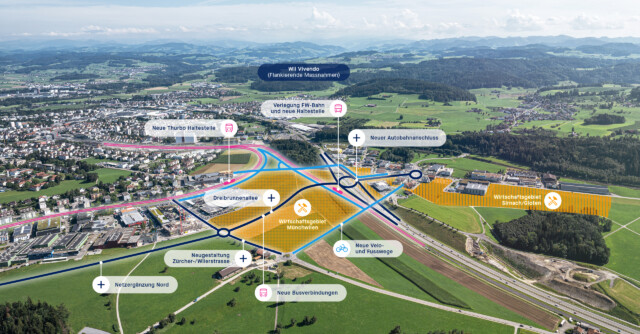
    Bünztal Economic Development is to act as a “bridge builder between the economy, authorities and educational institutions”. Current tasks relate to the cantonal development focus Wohlen-Villmergen and the Wil/Huebächer business park. The Unteres Bünztal region includes the Aargau municipalities of Büttikon, Dintikon, Dottikon, Hägglingen, Hendschiken, Othmarsingen, Sarmenstorf, Uezwil, Villmergen, Waltenschwil and Wohlen.

  • New gastronomic experience at Zurich Airport

    New gastronomic experience at Zurich Airport

    The new TREATS food hall planned at Zurich Airport will be operated by the food collective ag, according to a press release. Food collective is part of the event management company Pointbreak Group in Zurich. The new 2,000 square meter Foodhall TREATS building is part of the comprehensive renovation of the shopping area at the airport. The opening is planned for fall 2027. Gastronomes can now apply to offer their products there. The total investment amounts to around CHF 250 million and will be borne by Flughafen Zürich AG.

    TREATS will offer over 1,000 seats on around 2,000 square meters, making it one of the largest food halls in Switzerland, according to the press release. The twelve-metre-high hall has two levels and offers 16 food stalls, changing food trucks, four bars and a café. There is also a stage for events and several outdoor terraces.

    The new food hall is being built between the P1 and P2 parking garages on the bus station level and connects various areas from shopping to arrivals and departures to the train station, the Circle and the parking garages. A total of five entrances and exits will provide direct accessibility from different sides.

    “At TREATS, the focus is on enjoying food and being together – true to the motto: Treat yourself!”, Stefan Gross, Chief Commercial Officer of Flughafen Zürich AG, is quoted as saying.

  • Heat from a depth of 2000 meters planned

    Heat from a depth of 2000 meters planned

    The Federal Office for Buildings and Logistics (BBL) has announced an exploratory borehole for a planned geothermal project in Magglingen. Provided the necessary credit approval from the Federal Assembly and drilling permits from the cantonal authorities are obtained, deep water should be detected at a depth of around 1,500 to 2,300 meters.

    According to a press release, “several potential deep water reservoirs” are suspected there, which are to be used for a geothermal plant at the Magglingen National Sports Center of the Federal Office of Sport (FOSPO). The plant could supply heat there from 2029.

    This was preceded by underground investigations in 2023 by the FOBL. These were intended to help obtain a “geological image of the subsoil that is as precise as possible”. The exploration step that has now been announced is intended to further clarify whether the deep water is suitable for the economic use of a geothermal plant in the event of positive evidence.

    Seismic investigations are the basis of many geothermal projects to clarify the exact location of the deep water and because key figures such as water temperature, water volume and flow rate are lacking. The planned exploratory drilling reduces uncertainties and project risks.

  • Fewer hurdles for solar systems

    Fewer hurdles for solar systems

    Switzerland is facing a potentially ground-breaking change in building and energy law. A federal popular initiative demands that solar installations on existing buildings and facilities should no longer require a building permit in future. This should also apply to protected sites and landscapes, with a few exceptions such as nationally important cultural monuments.

    This requirement could open up new perspectives for real estate developers, investors and location promoters. Until now, monument preservation, local heritage commissions and lengthy procedures have often delayed urgently needed energy projects. The initiative, launched by the IG Solaranlagen association, responds to this standstill with a clear appeal to simplify, accelerate and implement.

    Constitutional amendment with effect
    The initiative proposes a new constitutional article that clarifies that no building permit is required for solar installations, regardless of their location. The only exceptions are installations on cultural objects worthy of protection. If the initiative is accepted, parliament will only have one year to create the legal basis. Otherwise, a Federal Council ordinance will automatically come into force.

    This clear deadline creates legal certainty. An important point for project developments and investment decisions in the area of sustainable real estate.

    A signal for Switzerland as a business location
    The initiative strikes a chord with the times. The rapid expansion of solar energy is crucial for security of supply, climate protection and the future viability of Switzerland as a business location. At the same time, it opens up opportunities for the real estate industry. New business models, value enhancement through energy-efficient renovations and sustainable neighborhood developments are within reach.

    The initiative also sends a clear message to politicians and administrators. The energy transition must not be allowed to fail due to outdated processes. Attractive locations are created where innovation is not hindered but accelerated.

  • What construction sites can learn from space missions

    What construction sites can learn from space missions

    Construction sites and space missions, two worlds that could hardly be more different. Nevertheless, if you take a closer look, you will discover key similarities. Both working environments are characterized by uncertainty, high complexity and potentially life-threatening situations. This is precisely where astronaut Maria Martini’s knowledge comes in. She simulates space missions under real, extreme conditions on earth. In caves, deserts or under water and brings with her knowledge that is also highly relevant for construction workers.

    Routine saves lives
    In space travel, as in the construction industry, one thing counts above all: absolute reliability in every movement. Whether belaying on scaffolding or roping up in a cave, safety protocols must be internalized in such a way that they run flawlessly even under stress. “A single mistake can have fatal consequences,” says Maria. That’s why they train until every move is perfect. A discipline that also pays off on the construction site.

    Systematic use of technology
    The personal protective equipment is not just compulsory, it’s high-tech. Maria’s spacesuit is equipped with a helmet, light, radio connection and video transmission to the control center. Similar systems are used on modern construction sites. Smart helmets, sensor-based safety solutions, real-time communication. The message is clear: promoting innovation in equipment not only increases efficiency, but also safety.

    Communication as a guarantee of safety
    In dangerous situations, the quality of communication is often decisive. What is known as “mission control” in space missions corresponds to clearly structured communication between foremen, safety officers and site management on the construction site. For Maria, one thing is clear: “A team can only survive in extreme situations if everyone knows what needs to be done and trusts each other.”

    Stress resistance and leadership skills
    Critical moments require a cool head. When Maria almost lost her footing during a mission in a muddy cave, the calm leadership of her commander helped her to resolve the situation safely. On the construction site, too, managers must be able to recognize risks, de-escalate and lead the team through difficult situations. This is a skill that needs to be trained and encouraged.

    Space principles for greater safety on construction sites
    The parallels are clear: discipline, team spirit, use of technology and professional crisis management are success factors on the construction site just as they are on space missions. Companies in the construction industry or in site management that focus on a sustainable safety culture today not only benefit from fewer accidents, but also increase their attractiveness as a modern, responsible employer.

  • Economy under pressure, how crisis-proof is Switzerland?

    Economy under pressure, how crisis-proof is Switzerland?

    Since the intensification of global trade conflicts under the current US administration, questions about economic resilience have once again come to the fore. A new study by the KOF Swiss Economic Institute at ETH Zurich sheds light on how vulnerable the Swiss economy actually is to international upheavals.

    KOF Co-Director Hans Gersbach puts it in a nutshell and says that Switzerland is both robust and vulnerable at the same time. While short-term shocks can usually be cushioned well, prolonged trade conflicts threaten permanent GDP losses of over one percent per year. Key sectors such as mechanical engineering, pharmaceuticals and the precision industry, which also play a central role for Switzerland as a business location and the real estate markets, would be hit particularly hard.

    Scenarios show risks for location and stability
    The analysis is based on the new “KOF Trade Model”. An innovative equilibrium model that maps global supply chains, price changes and demand effects in detail. The simulations show that almost all of the scenarios examined are negative for Switzerland, especially if protectionist measures affect entire trading blocs.

    An escalation between the USA and Europe would be particularly critical, as a result of which Switzerland would also be affected by counter-tariffs. In this case, growth could fall by more than one percent of GDP per year. A serious blow, especially for export-oriented industries and their business environment.

    Recognize risks early and strengthen resilience in a targeted manner
    The study also names specific areas of action. Free trade agreements and strategic diversification of import and export markets are among the most important levers for strengthening the resilience of the Swiss economy. Stable framework conditions for investments in key technologies and an innovation-friendly environment are equally crucial.

    Foresight instead of alarmism
    The KOF study shows that Switzerland is vulnerable at a global level, but has instruments at its disposal to minimize risks. A smart trade policy, strategic promotion of innovation and stable institutional framework conditions not only strengthen the economy, they also make the business location more crisis-proof and attractive for long-term investments.